-->
LATEST HEADLINES
66th REPUBLIC DAY WISHES TO ALL INDIANSZizix Tutorials
LATEST POSTS TIME OF NOW
Showing posts with label ENERGY & ENVIRONMENT. Show all posts

From Pig to Fuel - Anaerobic digester generates energy, reduces odors

Teng Lim is operating a small-scale anaerobic digester at the MU swine farm in Columbia. The system generates energy and can mitigate hog odor. Courtesy Jon Lamb.
 Teng Lim is operating a small-scale anaerobic digester at the MU swine farm in Columbia. The system generates energy and can mitigate hog odor. Courtesy Jon Lamb.

The University of Missouri has unveiled a prototype small-scale anaerobic digestion system that produces biogas from pig manure. The biogas can be used to heat a farm and create electricity. The device also reduces odor from swine operations.

“What we want to do is improve and fully utilize all the biogas for energy production,” said Teng Lim, Extension Ag Systems Management associate professor.

Funded by the MU College of Agriculture, Food and Natural Resources, the anaerobic digester consists of three tanks. Manure from the hog barn pit is pumped into one tank where the manure is stored and mixed. The anaerobic digestion takes place in the other two tanks, where bacteria break down the manure in these warm and oxygen-free tanks.

The biogas from the manure can be used for electricity and hot water production. With some further treatment it can also be stored as a compressed natural gas, for heating or even vehicle fuel.

PigsLim says a larger scale digester could supply a farm’s energy needs and also be sold to the grid to provide electricity to the community.

There are other benefits to anaerobic digestion in addition to energy generation. The digested manure retains the nutrients to be good fertilizer while becoming a more consistent product. Also, the digester can reduce odor emissions.

“When the manure is treated by the digester process the odor concentration is significantly reduced,” Lim said. “There is still going to be odor, but it’s going to be much lower and less fluctuation than the raw manure.”

A Lot of Pork

The swine industry is big in the United States – there are 73,150 pork farms in America with 120 million pigs marketed each year.

Before the 1960s, most pork in the U.S. was raised in outside lots or on pasture systems. With the development of slotted floors and liquid manure handling equipment, it became possible for producers to more easily care for larger numbers of animals. Enclosed buildings overcame most weather problems and predators, and minimized the potential pollution from outside lot runoff.

Typically, pig odor is a localized air quality problem, with low concentrations of odorous gases such as p-cresol. Odor problems are often a starting point for litigation. Many farmers can go out of business just fighting a lawsuit.

An Important Part of Future Farms?

There are challenges to anaerobic digestion, the biggest being cost and management. In a commercial setting the digester would be 100 times larger than the one at MU’s swine research facility.

Lim pointed out that industry leaders and scientists believe anaerobic digesters will be an important piece of future farms, both to mitigate odor and for generating renewable energy.  The cost is a major obstacle now. The team is working closely with industry experts from Martin Machinery, a Missouri company who specializes in biogas generators and control systems.

MU researchers are using the scaled down digester to find ways to make digesters more affordable and easier to manage. They are also using it as an education tool to show producers the potentials, what it takes to process the manure, and to train people how to properly run a system like this.

Source: Cafnr

Silicon carbide increases energy efficiency

Illustration of the fill port of a silicon single crystal bar which has been prepared by the zone melting process. (Photo: TRUMPF Hüttinger)
To increase the efficiency of the power supply in industrial processes, thereby saving energy and CO2, the aim of the new joint "MMPSiC": Researchers at the Light Technology Institute (LTI) at the Karlsruhe Institute of Technology (KIT) examine together with the industrial partners TRUMPF Hüttinger and IXYS Semiconductor the use of power semiconductor switches of silicon carbide. The Federal Research Ministry is supporting the project with around 800,000 euros.

Of the semiconductor manufacturing over the coating of displays to processes in the automotive industry: Many industrial processes consume large amounts of electrical energy. Among these are technologies that will play an important role in the energy transition, as the zone melting method (float zone method) for producing high purity crystalline materials: The substance is electrically fused in a narrow zone; the melting zone is gradually continued. Behind the melting zone crystallized substance purer than before. The zone melting method provides, among other high-purity silicon single crystals for the manufacture of solar cells.

Power supply of zone melting systems based on tube technology systems are used to now having an electrical efficiency of up to 65 percent. By switching to power semiconductor silicon carbide, the efficiency of the process power supply could be increased to over 80 percent. This would save large amounts of electrical energy and reduce greenhouse gas emissions. For example, for a single float-zone scale plant would result consisting of 20 x 150 kW-process power supplies, with an annual duration of 4800 hours, a savings of more than 200,000 kWh of electrical energy and 109 tonnes of CO2 (Umweltbundesamt, as of July 2013).

The feasibility of such a process power supplies, researchers at the Light Technology Institute (LTI) of KIT together with the partners TRUMPF Hüttinger GmbH + Co. KG (Freiburg) and IXYS Semiconductor GmbH (Lampertheim) in the joint project "Modular medium frequency process power supply with silicon carbide semiconductor power switches" (MMPSiC) , As the semiconductor material Silicon Carbide offers several advantages: Thanks to the larger electronic band gap allows much higher operating temperatures than conventional semiconductors. Power electronics with silicon carbide is characterized by higher energy efficiency and compactness.

"When the power of energy-intensive industrial applications such as the zone melting method, it is necessary to switch at high frequencies," says the project director, Dr. Rainer Kling from LTI of KIT. "Silicon carbide is not yet tested for these high frequencies; so that we are breaking new ground. "In addition to examining the long-term stability include the control and the layout of the circuit to the tasks of the KIT researchers in the joint project MMPSiC.

The Federal Ministry of Education and Research (BMBF) supports MMPSiC project on the basis of the program "Information and Communication Technology 2020" (ICT 2020) as part of the funding program "Power electronics to increase energy efficiency" (LES 2) with around 800,000 euros. Of which receives the LTI KIT around 439,000 euros. Overall, the project volume is 1.3 million euros. The joint project started in 2014 and is planned for three years.

Source: KIT

New technique could lead to cheaper, more efficient solar power and LEDs

Researchers Valerio Adinolfi (left) and Riccardo Comin examine a perovskite crystal. Perovskites are attracting growing interest in the context of thin-film solar technologies, but had never been studied in their purest form: as perfect single crystals. Credit; Toronto
U of T experts are shining new light on an emerging family of solar-absorbing materials that could lead to cheaper and more efficient solar panels and LEDs.

The materials, called perovskites, are particularly good at absorbing visible light, but had never been studied in their purest form: as perfect single crystals.

Using a new technique, researchers grew large, pure perovskite crystals and studied how electrons move through the material as light is converted to electricity.

Led by Professor Ted Sargent of The Edward S. Rogers Sr. Department of Electrical & Computer Engineering at the University of Toronto in collaboration with Professor Osman Bakr of the King Abdullah University of Science and Technology (KAUST), the team used a combination of laser-based techniques to measure selected properties of the perovskite crystals.
By tracking down the ultrafast motion of electrons in the material, they have been able to measure the diffusion length – how far electrons can travel without getting trapped by imperfections in the material – as well as mobility – how fast the electrons can move through the material. Their work was published this week in the journal Science.

“Our work sets the bar for the ultimate solar energy-harvesting performance of perovskites,” says Riccardo Comin, a post-doctoral fellow with the Sargent Group. “With these materials it’s been a race to try to get record efficiencies, and there are no signs of stopping or slowing down.”

In recent years, perovskite efficiency has soared to over 20 per cent, very close to the current best performance of commercial-grade silicon-based solar panels you see mounted in Spanish deserts and on Californian roofs.

“In terms of efficiency, perovskites are perfectly comparable or better than materials that have already been commercialized,” says Valerio Adinolfi, a PhD candidate in the Sargent Group and co-first author on the paper. “The challenge is to make solar attractive from the business side. It’s not just matter of making it efficient – the point is to make it efficient and cheap.”

The study has obvious implications for green energy, but may also enable innovations in lighting.

image of crystalized materials in lab

Think of a solar panel made of perovskite crystals as a fancy slab of glass: light hits the crystal surface and gets absorbed, exciting electrons in the material. Those electrons travel easily through the crystal to electrical contacts on its underside, where they are collected in the form of electric current.

Now imagine the sequence in reverse – power the slab with electricity, inject electrons and release energy as light. A more efficient electricity-to-light conversion means perovskites could open new frontiers for energy-efficient LEDs.

Parallel work in the Sargent Group focuses on improving nano-engineered solar-absorbing particles called colloidal quantum dots. “Perovskites are great visible-light harvesters, and quantum dots are great for infrared,” said Sargent.

“In future, we will explore the opportunities for stacking together complementary absorbent materials,” says Dr. Comin. “There are very promising prospects for combining perovskite work and quantum dot work for further boosting the efficiency.”

Source: U of T

Stanford scientists use ocean waves to monitor offshore oil and gas fields

A new technique for passively probing the sea floor using weak seismic waves generated by the ocean was tested at the Ekofisk oil field in the North Sea. 
A technology developed by Stanford scientists for passively probing the seafloor using weak seismic waves generated by the ocean could revolutionize offshore oil and natural gas extraction by providing real-time monitoring of the subsurface while lessening the impact on marine life.

"We've shown that we can generate images of the subsurface nearly every day instead of taking snapshots just two or three times a year," said Biondo Biondi, professor of geophysics at Stanford's School of Earth Sciences.

Currently, many energy companies use a technique called time-lapse reflection seismology to monitor offshore oil and gas deposits to optimize production and look for hazards such as hidden gas pockets. Reflection seismology involves ships towing arrays of "air guns" that explode every 10 to 15 seconds to produce loud sound pulses. The pulses bounce off the seafloor and geological formations beneath, then journey back to the surface, where they are recorded by hydrophones. The data are then deciphered to reveal details about subsurface structures.

Each survey can cost tens of millions of dollars, and as a result they are only conducted two to three times a year. Environmental groups and marine biologists have expressed concerns about the use of air guns for contributing to noise pollution in the ocean that can disturb or even injure marine animals, including humpback whales and giant squid.

The new technique developed by Biondi and Sjoerd de Ridder, a student of Biondi's who is now a postdoctoral scientist at the University of Edinburgh, is different. It exploits naturally occurring seismic waves generated by Earth's oceans that are several orders of magnitude weaker than those produced by earthquakes.

Ambient seismicity

As ocean waves collide with one another, they create pressures on the sea floor, where they generate seismic waves that then propagate in every direction. Scientists have known about this "ambient seismic field" for nearly a century, but it was only recently that they understood ways to harness it.

"We knew the ambient seismic energy was there, but we didn't know what we could do with it," De Ridder said. "That understanding has only been developed in recent years. Our technique provides the first large-scale application to harness it for oil and gas production."

The technique that Biondi and De Ridder developed, called ambient seismic field noise-correlation tomography, or ASNT, uses sensors embedded in the seafloor. The sensors, which are typically installed by robotic submersibles, are connected to one another by cables and arranged into parallel rows that can span several kilometers of the seafloor. Another cable connects the sensor array to a platform in order to collect data in real time.

The sensors record ambient seismic waves traveling through Earth's crust. The waves are ubiquitous, continuously generated and traveling in every direction, but using careful signal-processing schemes they developed, Biondi and De Ridder can digitally isolate only those waves that are passing through one sensor and then another one downstream. When this is done repeatedly, and for multiple sensors in the network, what emerges is a "virtual" seismic wave pattern that is remarkably similar to the kind generated by air guns.

Less disruptive

Because the ASNT technique is entirely passive, meaning it does not require a controlled explosion or a loud air gun blast to create a seismic wave signature, it can be performed for a fraction of the cost of an active-reflection-seismology survey and should be far less disruptive to marine life, the scientists say.

Since 2007, Biondi and De Ridder have been testing and refining their technique in a real-world laboratory in Europe. The scientists worked with the energy companies BP and ConocoPhillips to study recordings from existing sensor arrays in the Valhall and Ekofisk oil fields in the North Sea that are capable of recording ambient seismic waves.

The proof-of-concept experiment has been successful, and the scientists have demonstrated that they can image the subsurface at Valhall down to a depth of nearly 1,000 feet. "We've now shown that our technique can very reliably and repeatedly retrieve an image of the near-surface," De Ridder said. "Our hope is that they can also reveal changes in the rocks that could signal an impending problem."

Source: Stanford

Wave energy integration costs should compare favorably to other energy sources

The Ocean Sentinel has been deployed off the Oregon Coast, one of the nation's first wave energy testing devices. Credit: Pat Kight, Oregon Sea Grant
A new analysis suggests that large-scale wave energy systems developed in the Pacific Northwest should be comparatively steady, dependable and able to be integrated into the overall energy grid at lower costs than some other forms of alternative energy, including wind power.

The findings, published in the journal Renewable Energy, confirm what scientists have expected -- that wave energy will have fewer problems with variability than some energy sources and that by balancing wave energy production over a larger geographic area, the variability can be even further reduced.

The variability of alternative energy sources is one factor that holds back their wider use -- if wind or solar energy decreases and varies widely, then some other energy production has to back it up, and that adds to the overall cost of energy supply.

"Whenever any new form of energy is added, a challenge is to integrate it into the system along with the other sources," said Ted Brekken, an associate professor and renewable energy expert in the College of Engineering at Oregon State University.

"By producing wave energy from a range of different sites, possibly with different types of technology, and taking advantage of the comparative consistency of the wave resource itself, it appears that wave energy integration should be easier than that of wind energy," he said. "The reserve, or backup generation, necessary for wave energy integration should be minimal."

This estimate of the cost of integrating wind energy indicated that it would be 10 percent or less than the actual charges being made for the integration of wind energy. Energy integration, however, is just one component of the overall cost of the power generated. Wave energy, still in the infancy of its development, is not yet cost competitive on an overall basis.

Wave energy is not now being commercially produced in the Pacific Northwest, but experts say its future potential is significant, and costs should come down as technologies improve and more systems are developed. This study examined the hypothetical addition of 500 megawatts of generating capacity in this region by 2025, which would be comparable to approximately five large wind farms.

Another strength of wave energy, the study suggested, is that its short-term generation capacity can be predicted with a high degree of accuracy over a time scale ranging from minutes to hours, and with some accuracy even seasonally or annually.

The Pacific Northwest has some of the nation's best wave energy resources, and as a result is home to the Northwest National Marine Renewable Energy Center, supported by the U.S. Department of Energy.

Wave energy in the region is expected to spur economic growth, help diversify the energy portfolio, reduce greenhouse gas emissions and reduce transmission losses, the study noted.

Source: Oregon State University

Getting Bot Besponders into Shape - Scientists are tackling one of the biggest barriers to the use of robots in emergency response: energy efficiency

Steve Buerger is leading a Sandia National Laboratories project to demonstrate how energy efficient biped walking robots could become. Increased efficiency could enable bots to operate for much longer periods of time without recharging batteries, an important factor in emergency situations. Credit: Photo by Randy Montoya
Sandia National Laboratories is tackling one of the biggest barriers to the use of robots in emergency response: energy efficiency.

Through a project supported by the Defense Advanced Research Projects Agency (DARPA), Sandia is developing technology that will dramatically improve the endurance of legged robots, helping them operate for long periods while performing the types of locomotion most relevant to disaster response scenarios.

One of Sandia's new robots that showcases this technology will be demonstrated at an exposition to be held in conjunction with the DARPA Robotics Challenge Finals next June.

As the finals draw closer, some of the most advanced robotics research and development organizations in the world are racing to develop emergency response robots that can complete a battery of tasks specified by DARPA. Competing robots will face degraded physical environments that simulate conditions likely to occur in a natural or human-made disaster. Many robots will walk on legs to allow them to negotiate challenging terrain.

Sandia's robots won't compete in the finals next June, but they could ultimately help the winning robots extend their battery life until their life-saving work is done.

"We'll demonstrate how energy efficient biped walking robots could become. Increased efficiency could allow robots similar to those used for the competition to operate for much longer periods of time without recharging batteries," said project lead Steve Buerger of Sandia's Intelligent Systems Control Dept.

Batteries need to last for emergency response robots

Battery life is an important concern in the usefulness of robots for emergency response.
"You can have the biggest, baddest, toughest robot on the planet, but if its battery life is 10 or 20 minutes, as many are right now, that robot cannot possibly function in an emergency situation, when lives are at stake," said Buerger.

The first robot Sandia is developing in support of the DARPA Challenge, is known as STEPPR for Sandia Transmission Efficient Prototype Promoting Research. It is a fully functional research platform that allows developers to try different joint-level mechanisms that function like elbows and knees to quantify how much energy is used.

Sandia's second robot, WANDERER for Walking Anthropomorphic Novelly Driven Efficient Robot for Emergency Response, will be a more optimized and better-packaged prototype.

Energy-efficient actuators key to testing

The key to the testing is Sandia's novel, energy-efficient actuators, which move the robots' joints. The actuation system uses efficient, brushless DC motors with very high torque-to-weight ratios, very efficient low-ratio transmissions and specially designed passive mechanisms customized for each joint to ensure energy efficiency.

"We take advantage of dynamic characteristics that are common to a wide variety of legged behaviors and add a set of 'support elements,' including springs and variable transmissions, that keep the motors operating at more efficient speed-torque conditions, reducing losses," Buerger said.

Electric motors are particularly inefficient when providing large torques at low speeds, for example, to a crouching robot, Buerger said. A simple support element, such as a spring, would provide torque, reducing the load on the motor.

"The support elements also allow robots to self-adjust when they change behaviors. When they change from level walking to uphill walking, for example, they can make subtle adjustments to their joint dynamics to optimize efficiency under the new condition," Buerger said.

Robots must adapt to the diverse kinds of conditions expected in emergency response scenarios.
"Certain legged robot designs are extremely efficient when walking on level ground, but function extremely inefficiently under other conditions or cannot walk over different types of terrains. Robots need an actuation system to enable efficient locomotion in many different conditions," Buerger said. "That is what the adjustable support elements can do."

Early testing has shown STEPPR to operate efficiently and quietly.

"Noise is lost energy, so being quiet goes hand-in-hand with being efficient. Most robots make a lot of noise, and that can be a major drawback for some applications," Buerger said.

Robots' electronics, certain software to be publicly released

STEPPR's and WANDERER's electronics and low-level software are being developed by the Open Source Robotics Foundation. The designs will be publicly released, allowing engineers and designers all over the world to take advantage of advances.

The Florida Institute for Human and Machine Cognition is developing energy-efficient walking control algorithms for both robots. The Massachusetts Institute of Technology and Globe Motors also are contributing to the project.

WATCH VIDEO


Source: Sandia National Laboratories

Glimpsing pathway of sunlight to electricity

Andrew H. Marcus and Mark C. Lonergan stand by UO spectroscopy equipment. Credit: Image courtesy of University of Oregon
Four pulses of laser light on nanoparticle photocells in a University of Oregon spectroscopy experiment has opened a window on how captured sunlight can be converted into electricity.

The work, which potentially could inspire devices with improved efficiency in solar energy conversion, was performed on photocells that used lead-sulfide quantum dots as photoactive semiconductor material. The research is detailed in a paper placed online by the journal Nature Communications.

In the process studied, each single photon, or particle of sunlight, that is absorbed potentially creates multiple packets of energy called excitons. These packets can subsequently generate multiple free electrons that generate electricity in a process known as multiple exciton generation (MEG). In most solar cells, each absorbed photon creates just one potential free electron.

Multiple exciton generation is of interests because it can lead to solar cells that generate more electrical current and make them more efficient. The UO work shines new light on the little understood process of MEG in nanomaterials.

While the potential importance of MEG in solar energy conversion is under debate by scientists, the UO spectroscopy experiment -- adapted in a collaboration with scientists at Sweden's Lund University -- should be useful for studying many other processes in photovoltaic nanomaterials, said Andrew H. Marcus, professor of physical chemistry and head of the UO Department of Chemistry and Biochemistry.

Spectroscopic experiments previously designed by Marcus to perform two-dimensional fluorescence spectroscopy of biological molecules were adapted to also measure photocurrent. "Spectroscopy is all about light and molecules and what they do together," Marcus said. "It is a really great probe that helps to tell us about the reaction pathway that connects the beginning of a chemical or physical process to its end.
"The approach is similar to looking at how molecules come together in DNA, but instead we looked at interactions within semiconductor materials," said Marcus, an affiliate in UO's Institute of Molecular Biology, Materials Science Institute and Oregon Center for Optics. "Our method made it possible to look at electronic pathways involved in creating multiple excitons. The existence of this phenomenon had only been inferred through indirect evidence. We believe we have seen the initial steps that lead to MEG-mediated photo conductivity."
The controlled sequencing of laser pulses allowed the seven-member research team to see -- in femtoseconds (a femtosecond is one millionth of one billionth of a second) -- the arrival of light, its interaction with resting electrons and the subsequent conversion into multiple excitons. The combined use of photocurrent and fluorescence two-dimensional spectroscopy, Marcus said, provided complementary information about the reaction pathway.

UO co-author Mark C. Lonergan, professor of physical and materials chemistry, who studies electrical and electrochemical phenomena in solid-state systems, likened the processes being observed to people moving through a corn maze that has one entrance and three exits.
People entering the maze are photons. Those who exit quickly represent absorbed photons that generate unusable heat. People leaving the second exit represent other absorbed photons that generate fluorescence but not usable free electrons. People leaving the final exit signify usable electrical current.

"The question we are interested in is exactly what does the maze look like," Lonergan said. "The problem is we don't have good techniques to look inside the maze to discover the possible pathways through it. The techniques that Andy has developed basically allow us to see into the maze by encoding what is coming out of the system in terms of exactly what is going in. We can visualize what is going on, whether two people coming into the maze shook hands at some point and details about the pathway that led them to come out the electricity exit."

The project began when Tonu Pullerits, who studies ultrafast photochemistry in semiconductor molecular materials at Lund University, approached Marcus about adopting his spectroscopic system to look at solar materials. Khadga J. Karki, a postdoctoral researcher in Pullerits' lab, then visited the UO and teamed with the Marcus and Lonergan groups to reconfigure the equipment.

UO doctoral student Julia R. Widom was a co-leading author on the paper. Other co-authors with Pullerits, Marcus and Lonergan were Joachim Seibt of Lund University and UO graduate student Ian Moody.

Source:  University of Oregon

Seeing the forest for the trees: Youngest trees in a forest tell the biggest story

LSU ecologist Kyle Harms co-authors first study to quantify the process of diversification in forests and likely all other sessile ecosystems. Credit: Louisiana State University
The largest trees in a forest may command the most attention, but the smallest seedlings and youngest saplings are the ones that are most critical to the composition and diversity of the forest overall. While many people gaze up into the forest canopy, scientist Joseph Connell has spent much of his career looking down quite closely at the forest understory. Connell, who is a professor emeritus in the Department of Ecology, Evolution and Marine Biology at the University of California at Santa Barbara, established one of the world's longest, in-depth ecological research studies on the planet. The Connell Plots Rainforest Network has thus far produced a 50-year collection of data on individual trees in Australia's protected rainforests.

"Having such a long-term, detailed dataset is highly unusual. It's the kind of temporal depth we need to answer some of the big questions such as, what are the ecological processes that maintain diversity?" said Kyle Harms, professor in the LSU Department of Biological Sciences and a collaborator with Connell.

Early in his career, Harms was a post-doctoral researcher in Connell's lab at U.C. Santa Barbara. There, he met former fellow post-doctoral researcher and current collaborator Peter Green, who is a senior lecturer at La Trobe University in Melbourne, Australia.
Harms and Green were inspired to use their mentor's dataset; therefore, they devised an analysis to test the long-standing hypothesis that the patterns of composition and diversity among a forest's mature trees are largely set by processes that occur in trees' earliest life stages. Harms ran statistical analyses on 7,977 individual trees across 186 species that were censused in one of Connell's tropical Australian forest plots from 1971-2013.
He repeatedly ran simulation analyses on six tiers of trees based on size in order to predict the expected outcome of diversity at each tier. Then he compared the expected levels of diversity in each tier with the true collected data.

"What we found was that the seedlings are more diverse than the statistical expectations predicted them to be, but the larger trees' levels of diversity were about the same as the predictions" he said.

These results are the first quantitative evidence that the earliest life cycle stages of individual trees are more critical than later stages to the overall relative abundances of mature trees in a forest. Their findings will be published online in the Proceedings of the National Academy of Sciences this week.

The stronger influence of ecological sorting processes operating at the earliest life cycle stages compared to later life stages, which they quantified, also likely occurs in other highly diverse ecosystems with rooted, or sessile, organisms including grasslands, herbaceous plant communities and marine communities of coral.

"I think this is something that is happening broadly in ecosystems across the planet," Harms said.

He and his collaborators' results underscore the importance of support for long-term, in-depth datasets, as well as the need to investigate the early life stages -- for example, the smallest, newly germinated seedlings -- where the most critical processes are occurring.
"I think it helps us understand where to focus in order to really understand the biased sorting processes that create the composition and diversity patterns in the forest overall," he said.

The Matched 'hybrid' systems may hold key to wider use of renewable energy

Wind farms such as this one in Idaho might be combined with other forms of alternative energy to better balance the output of sustainable energy.
Wind farms such as this one in Idaho might be combined with other forms of alternative energy to better balance the output of sustainable energy. Credit: Nordex USA/US Department of Energy
The use of renewable energy in the United States could take a significant leap forward with improved storage technologies or more efforts to "match" different forms of alternative energy systems that provide an overall more steady flow of electricity, researchers say in a new report.

Historically, a major drawback to the use and cost-effectiveness of alternative energy systems has been that they are too variable -- if the wind doesn't blow or the sun doesn't shine, a completely different energy system has to be available to pick up the slack. This lack of dependability is costly and inefficient.

But in an analysis just published in The Electricity Journal, scientists say that much of this problem could be addressed with enhanced energy storage technology or by developing "hybrid" systems in which, on a broader geographic scale, one form of renewable energy is ramping up even while the other is declining.

"Wind energy is already pretty cost-competitive and solar energy is quickly getting there," said Anna Kelly, a graduate student in the School of Public Policy at Oregon State University, and an energy policy analyst. "The key to greater use of these and other technologies is to match them in smart-grid, connected systems.

"This is already being done successfully in a number of countries and the approach could be expanded."

For instance, the wind often blows more strongly at night in some regions, Kelly said, and solar technology can only produce energy during the day. By making more sophisticated use of that basic concept in a connected grid, and pairing it with more advanced forms of energy storage, the door could be opened for a much wider use of renewable energy systems, scientists say.

"This is more than just an idea, it's a working reality in energy facilities around the world, in places like Spain, Morocco and China, as well as the U.S.," Kelly said. "Geothermal is being paired with solar; wind and solar with lithium-ion batteries; and wind and biodiesel with batteries. By helping to address the price issue, renewable energy is being produced in hybrid systems by real, private companies that are making real money."

Advanced energy storage could be another huge key to making renewable energy more functional, and one example is just being developed in several cooperating states in the West. Electricity is being produced by efficient wind farms in Wyoming; transmitted to Utah where it's being stored via compressed air in certain rock formations; and ultimately used to help power Los Angeles.

This $8 billion system could be an indicator of things to come, since compressed air can rapidly respond to energy needs and be readily scaled up to be cost-competitive at a significant commercial level.

"There are still a number of obstacles to overcome," said Joshua Merritt, a co-author on the report and also a graduate student in mechanical engineering and public policy at OSU. "Our transmission grids need major improvements so we can more easily produce energy and then send it to where it's needed. There are some regulatory hurdles to overcome. And the public has to more readily accept energy systems like wind, wave or solar in practice, not just in theory."

The "not in my back yard" opposition to renewable energy systems is still a reality, the researchers said, and there are still some environmental concerns about virtually any form of energy, whether it's birds killed by wind turbine rotors, fish losses in hydroelectric dams or chemical contaminants from use of solar energy.

The near future may offer more options, the researchers said. Advanced battery storage technologies are becoming more feasible. Wave or tidal energy may become a real contributor, and some of those forces are more predictable and stable by definition. And the birth of small, modular nuclear reactors -- which can be built at lower cost and produce no greenhouse gas emissions -- could play a significant role in helping to balance energy outflows from renewable sources.

The long-term goal, the report concluded, is to identify technologies that can work in a hybrid system that offers consistency, dependability and doesn't rely on fossil fuels. With careful matching of systems, improved transmission abilities and some new technological advances, that goal may be closer than realized, they said.

"With development, the cost of these hybrid systems will decrease and become increasingly competitive, hopefully playing a larger role in power generation in the future," the researchers wrote in their conclusion.

Source: Oregon State University

Put a plastic bag in your tank: Converting polyethylene waste into liquid fuel

Researchers in India have developed a relatively low-temperature process to convert certain kinds of plastic waste into liquid fuel as a way to re-use discarded plastic bags and other products.
Researchers in India have developed a relatively low-temperature process to convert certain kinds of plastic waste into liquid fuel as a way to re-use discarded plastic bags and other products. They report full details next month in the International Journal of Environment and Waste Management.

Many pundits describe the present time as the "plastic age" for good reason and as such we generate a lot plastic waste. Among that waste is the common polymer, low-density polyethylene (LDPE), which is used to make many types of container, medical and laboratory equipment, computer components and, of course, plastic bags. Recycling initiatives are in place in many parts of the world, but much of the polyethylene waste ends up in landfill, dispersed in the environment or in the sea.

Chemist Achyut Kumar Panda of Centurion University of Technology and Management Odisha, India is working with chemical engineer Raghubansh Kumar Singh of the National Institute of Technology, Orissa, India, to develop a commercially viable technology for efficiently rendering LDPE into a liquid fuel. Given that most plastics are made from petrochemicals, this solution to plastic recycling brings the life-cycle full circle allowing a second use as an oil substitute. The process could, if implemented on a large enough scale, reduce pressures on landfill as well as ameliorating the effects of dwindling oil supplies in a world with increasing demands on petrochemicals for fuel.

In their approach, the team heats the plastic waste to between 400 and 500 Celsius over a kaolin catalyst. This causes the plastic's long chain polymer chains to break apart in a process known as thermo-catalytic degradation. This releases large quantities of much smaller, carbon-rich molecules. The team used the analytical technique of gas chromatography coupled mass spectrometry to characterize these product molecules and found the components of their liquid fuel to be mainly paraffins and olefins 10 to 16 carbon atoms long. This, they explain, makes the liquid fuel very similar chemically to conventional petrochemical fuels.

In terms of the catalyst, Kaolin is a clay mineral -- containing aluminum and silicon. It acts as a catalyst by providing a large reactive surface on which the polymer molecules can sit and so be exposed to high temperature inside the batch reactor, which breaks them apart. The team optimized the reaction at 450 Celsius a temperature with the lowest amount of kaolin at which more than 70% of the liquid fuel is produced. In other words, for every kilogram of waste plastic they could produce 700 grams of liquid fuel. The byproducts were combustible gases and wax. They could boost the yield to almost 80% and minimize reaction times, but this required a lot more catalyst 1 kg of kaolin for every 2 kg of plastic.

Heavy metals and hydroelectricity

August 2014 GSA Today cover image: The northeastern shoreline of Lake Junín, Peru. The pristine water surface belies a high level of heavy metal contamination of surface sediments. Credit: Donald T. Rodbell
Hydraulic engineering is increasingly relied on for hydroelectricity generation. However, redirecting stream flow can yield unintended consequences. In the August 2014 issue of GSA Today, Donald Rodbell of Union College-Schenectady and coauthors from the U.S. and Peru document the wholesale contamination of the Lake Junín National Reserve by acid mine drainage from the Cerro de Pasco mining district.

According to the World Bank, about 60% of Peru's electricity is generated by hydropower, which during the dry season relies heavily on glacial meltwater to augment stream flow. The ongoing reduction in ice cover in Peru that began early in the twentieth century has reduced the aerial extent of glacial ice in some areas by nearly 30%. According to this GSA Today article, climate models project that warming will be pronounced in the highest elevation regions of the tropical Andes, and thus acceleration in ice loss is likely.

To maintain dry-season river discharge and energy generation for a growing Peruvian population, the hydropower industry in Peru has turned to hydraulic engineering, including dam construction. This study highlights an unintended consequence of early dam construction in the Cerro de Pasco region of the central Peruvian Andes, a region that has been a focal point of Peruvian mining operations for centuries.

The Cerro de Pasco mining district is among the most extensively worked mining districts in Peru. Pre-colonial mining there showed some of the earliest evidence of anthropogenic lead enrichment by aerosolic fallout in nearby lakes about 600 years ago. The first copper smelter was established there in 1906, and in 1931 the new and improved Cerro smelter held monopoly over the refining of all nonferrous metals in Peru.

In order to generate hydroelectricity for Cerro de Pasco's operations, the Upamayo Dam was constructed in 1932. The Upamayo Dam is located in the uppermost reach of the Río Mantaro, immediately downstream of the confluence between the Río San Juan, which drains southward from Cerro de Pasco, and the outflow of Lake Junín, the largest lake entirely within Peru.

The location of the Upamayo Dam and the small reservoir upstream from it has resulted in the discharge of Río San Juan waters, once destined for the Río Mantaro, directly into Lake Junín. Rodbell et al.'s GSA Today paper documents the impact of acid mine drainage from Cerro de Pasco into Lake Junín, which in 1974 was designated a Peruvian National Wildlife Reserve.

As a result of the drainage, the upper several decimeters of sediment in the lake now contain levels of lead and zinc that greatly exceed the U.S. Environmental Protection Agency limits for the lake basin. Today, more than 60,000 metric tons of copper, almost 900,000 metric tons of zinc, and almost 41,000 metric tons of lead are contained in the upper 50 cm of lake sediment -- the zinc tonnage representing more than five years' worth of mining production at current rates.

Rodbell and colleagues write that among the biggest challenges that will face any attempt to mitigate the environmental disaster that has befallen Lake Junín are finding ways to stop the recycling of zinc from the lake bottom and the remobilization of all metals from the seasonally exposed and submerged deposits that are trapped behind the Upamayo Dam. Finally, they note that as future hydraulic engineering projects are developed in Peru and elsewhere, it would behoove all not to repeat the mistakes that are recorded in the mud of Lake Junín.

Source: Geological Society of America

Natural gas saves water, even when factoring in water lost to hydraulic fracturing

For every gallon of water used to produce natural gas through hydraulic fracturing, Texas saved 33 gallons of water by generating electricity with that natural gas instead of coal (in 2011).
A new study finds that in Texas, the U.S. state that annually generates the most electricity, the transition from coal to natural gas for electricity generation is saving water and making the state less vulnerable to drought.

Even though exploration for natural gas through hydraulic fracturing requires significant water consumption in Texas, the new consumption is easily offset by the overall water efficiencies of shifting electricity generation from coal to natural gas. The researchers estimate that water saved by shifting a power plant from coal to natural gas is 25 to 50 times as great as the amount of water used in hydraulic fracturing to extract the natural gas. Natural gas also enhances drought resilience by providing so-called peaking plants to complement increasing wind generation, which doesn't consume water.

The results of The University of Texas at Austin study are published this week in the journal Environmental Research Letters.

The researchers estimate that in 2011 alone, Texas would have consumed an additional 32 billion gallons of water -- enough to supply 870,000 average residents -- if all its natural gas-fired power plants were instead coal-fired plants, even after factoring in the additional consumption of water for hydraulic fracturing to extract the natural gas.

Hydraulic fracturing is a process in which water, sand and chemicals are pumped at high pressure into a well to fracture surrounding rocks and allow oil or gas to more easily flow. Hydraulic fracturing and horizontal drilling are the main drivers behind the current boom in U.S. natural gas production.
Environmentalists and others have raised concerns about the amount of water that is consumed. In Texas, concerns are heightened because the use of hydraulic fracturing is expanding rapidly while water supplies are dwindling as the third year of a devastating drought grinds on. Because most electric power plants rely on water for cooling, the electric power supply might be particularly vulnerable to drought.

"The bottom line is that hydraulic fracturing, by boosting natural gas production and moving the state from water-intensive coal technologies, makes our electric power system more drought resilient," says Bridget Scanlon, senior research scientist at the university's Bureau of Economic Geology, who led the study.

To study the drought resilience of Texas power plants, Scanlon and her colleagues collected water use data for all 423 of the state's power plants from the Energy Information Administration and from state agencies including the Texas Commission on Environmental Quality and the Texas Water Development Board, as well as other data.

Since the 1990s, the primary type of power plant built in Texas has been the natural gas combined cycle (NGCC) plant with cooling towers, which uses fuel and cooling water more efficiently than older steam turbine technologies. About a third of Texas power plants are NGCC. NGCC plants consume about a third as much water as coal steam turbine (CST) plants.

The other major type of natural gas plant in the state is a natural gas combustion turbine (NGCT) plant. NGCT plants can also help reduce the state's water consumption for electricity generation by providing "peaking power" to support expansion of wind energy. Wind turbines don't require water for cooling; yet wind doesn't always blow when you need electricity. NGCT generators can be brought online in a matter of seconds to smooth out swings in electricity demand. By combining NGCT generation with wind generation, total water use can be lowered even further compared with coal-fired power generation.

The study focused exclusively on Texas, but the authors believe the results should be applicable to other regions of the U.S., where water consumption rates for the key technologies evaluated -- hydraulic fracturing, NGCC plants with cooling towers and traditional coal steam turbine plants -- are generally the same.

The Electric Reliability Council of Texas, manager of the state's electricity grid, projects that if current market conditions continue through 2029, 65 percent of new power generation in the state will come from NGCC plants and 35 percent from natural gas combustion turbine plants, which use no water for cooling, but are less energy efficient than NGCC plants.

"Statewide, we're on track to continue reducing our water intensity of electricity generation," says Scanlon.

Hydraulic fracturing accounts for less than 1 percent of the water consumed in Texas. But in some areas where its use is heavily concentrated, it strains local water supplies, as documented in a 2011 study by Jean-Philippe Nicot of the Bureau of Economic Geology. Because natural gas is often used far from where it is originally produced, water savings from shifting to natural gas for electricity generation might not benefit the areas that use more water for hydraulic fracturing.


Source: University of Texas at Austin.

Tapping a valuable resource or invading the environment? Research examines the start of fracking in Ohio

A drilling rig in Carroll County, Ohio. Credit: Amy Townsend-Small
A new study is examining methane and other components in groundwater wells, in advance of drilling for shale gas that's expected over the next several years in an Ohio region.

Amy Townsend-Small, a University of Cincinnati assistant professor of geology, will present on the study on Sept. 27, at the 10th Applied Isotope Geochemistry Conference in Budapest, Hungary.
The team of UC researchers spent a year doing periodic testing of groundwater wells in Carroll County, Ohio, a section of Ohio that sits along the shale-rich Pennsylvania-West Virginia borders. The study analyzed 25 groundwater wells at varying distances from proposed fracking sites in the rural, Appalachian, Utica Shale region of Carroll County. Because the region is so rural, the majority of the population relies on groundwater wells for their water supply.

"This is a major area for shale gas drilling in Ohio, and one reason is because shales in the area are thought to have a good amount of liquid fuel as well as natural gas," says Townsend-Small.
The researchers are currently analyzing samples from groundwater wells over a one-year period, with water samples drawn every three-to-four months.

The samples are being analyzed for concentrations of methane as well as hydrocarbons -- a carcinogenic compound -- and salt, which is pulled up in the fracking water mixture from the shales, which are actually ancient ocean sediments.

"We're examining changes over time resulting from fracking, and since this is just beginning in Ohio, we have the opportunity to make some baseline assessments," says Townsend-Small.

Hydraulic fracturing, or fracking, involves using millions of gallons of water mixed with sand and chemicals to break up organic-rich shale to release natural gas resources. Proponents say fracking promises a future in lower energy prices, cleaner energy and additional jobs amid a frail economy. Opponents raise concerns about the practice leading to increased methane gas levels (known as the greenhouse gas) and other contamination -- resulting from spillover of fracking wastewater -- of groundwater in shale-rich regions.

Townsend-Small explains that some groundwater wells naturally hold a certain level of methane due to the decomposition of organic matter. It's not toxic in drinking water, but high levels can result in explosion. The study includes measurements of stable isotopes, which can indicate whether methane is derived from natural organic matter decomposition or from fossil fuels.

Other chemicals in fracking wastewater are toxic and dangerous for drinking water. Future UC research includes measurements of some of these compounds, as fracking progresses in the region.
The U.S. Energy Information Administration reported this summer that natural gas reserve additions in 2011 ranked as the second-largest annual increase since 1977, with hydraulic fracturing adding to increased oil and gas reserves.

The Ohio Department of Natural Resources reports that 882 sites in the state of Ohio have been awarded permits for fracking. In Carroll County, 327 sites have been awarded permits and 236 have been drilled.

Funding for the UC study was supported in coordination with UC Foundation by a $20,000 grant from the Missouri-based Deer Park Foundation, a $2,500 grant from the Cincinnati-based David and Sara Weston Foundation and an $85,714 grant from the Ohio Board of Regents.

Townsend-Small and her colleagues in the UC Department of Geology were also awarded a $400,000, 3-year grant from the National Science Foundation (EAR-1229114) for an isotope ratio mass spectrometer. The instrument measures the stable isotope composition of methane, which can indicate whether it is derived from biological activity or natural gas.

Source: University of Cincinnati

Study shows no evidence of groundwater contamination from hydraulic fracturing


Hydraulic fracturing of shale formations to extract natural gas has no direct connection to reports of groundwater contamination, based on evidence reviewed in a study released recently by the Energy Institute at The University of Texas at Austin.

The study, released at the annual meeting of the American Association for the Advancement of Science (AAAS) in Vancouver, British Columbia, found that many problems ascribed to hydraulic fracturing are related to processes common to all oil and gas drilling operations, such as casing failures or poor cement jobs.

University researchers also concluded that many reports of contamination can be traced to above-ground spills or other mishandling of wastewater produced from shale gas drilling, rather than from hydraulic fracturing per se, said Charles "Chip" Groat, an Energy Institute associate director who led the project.

"These problems are not unique to hydraulic fracturing," he said.
The research team examined evidence contained in reports of groundwater contamination attributed to hydraulic fracturing in three prominent shale plays -- the Barnett Shale in North Texas; the Marcellus Shale in Pennsylvania, New York and portions of Appalachia; and the Haynesville Shale in western Louisiana and northeast Texas.

The report identifies regulations related to shale gas development and evaluates individual states' capacity to enforce existing regulations. In addition, university researchers analyzed public perceptions of hydraulic fracturing, as derived from popular media, scientific literature and online surveys.
"Our goal was to provide policymakers a foundation for developing sensible regulations that ensure responsible shale gas development," Groat said. "What we've tried to do is separate fact from fiction."
Faculty members from across The University of Texas at Austin campus participated in the research, which the Energy Institute funded. The Environmental Defense Fund also assisted in developing the scope of work and methodology for the study. To read the complete report, visit http://energy.utexas.edu/.

Groat said researchers will supplement the study with an examination of reports relating to atmospheric emissions and seismic activity attributed to hydraulic fracturing, which have emerged as significant issues of concern in recent months.

Hydraulic fracturing involves the high-pressure injection of water, sand and chemicals into a shale bed, which causes the rock to shatter, releasing natural gas. The practice has been in use for decades but has come under scrutiny in recent years from environmentalists and others who fear it poses a threat to public health.

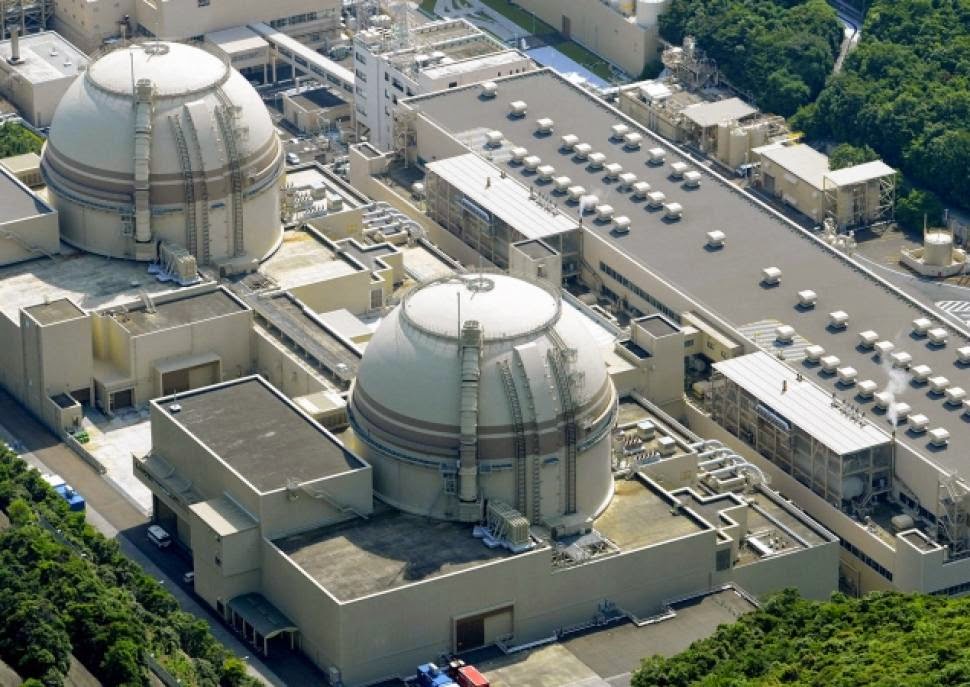
Should the Japanese give nuclear power another chance?

Japanese  nuclear power
On September 9, 2014, the Japan Times reported an increasing number of suicides coming from the survivors of the March 2011 disaster. In Minami Soma Hospital, which is located 23 km away from the power plant, the number of patients experiencing stress has also increased since the disaster. What's more, many of the survivors are now jobless and therefore facing an uncertain future.

This is not the first time that nuclear power has victimized the Japanese people. In 1945, atomic bombs exploded in Hiroshima and Nagasaki, creating massive fears about nuclear power in the Japanese population. It took 20 years for the public to erase the trauma of these events. It was then -- in the mid 1960s(?) -- that the Fukushima Daiichii Nuclear Power Plant was built.

According to Professor Tetsuo Sawada, Assistant Professor in the Laboratory of Nuclear Reactors at Tokyo University, it took a lot of effort to assure people that nuclear power was safe and beneficial. The first step was a legal step: In 1955, the Japanese government passed a law decreeing that nuclear power could only be used for peaceful purposes.

"But that law was not enough to assure people to accept the establishment of nuclear power," said Prof. Sawada.

He explained that the economy plays an important role in public acceptance of nuclear power. Through the establishment of nuclear power plants, more jobs were created, which boosted the economy of the Fukushima region at that time.

"Before the Fukushima disaster, we could find many pro-nuclear people in the area of nuclear power plants since it gave them money," said Prof. Sawada.

Now, more than forty years have passed and the public's former confidence has evolved into feelings of fear about nuclear power and distrust toward the government.

According to a study conducted by Noriko Iwai from the Japanese General Social Survey Research Center, the Fukushima nuclear accident has heightened people's perception of disaster risks, fears of nuclear accident, and recognition of pollution, and has changed public opinion on nuclear energy policy.
"Distance from nuclear plants and the perception of earthquake risk interactively correlate with opinions on nuclear issues: among people whose evaluation of earthquake risk is low, those who live nearer to the plants are more likely to object to the abolishment of nuclear plants," said Iwai.

This finding is in line with the perception of Sokyu Genyu, a chief priest in Fukujuji temple, Miharu Town, Fukushima Prefecture. As a member of the Reconstruction Design Council in Response to the Great East Japan Earthquake, he argued that both the Fukushima Daiichi and Daini nuclear power plants should be shut down in response to the objection of 80% of Fukushima residents.

However, the Japanese government, local scientists and international authorities have announced that Fukushima is safe. Radiation levels are below 1mSv/y, a number that, according to them, we should not be worried about. But the public do not believe in numbers.

But Genyu was not saying that these numbers are scientifically false. Rather, he argues that the problem lies more in the realm of social psychology. Despite the announcement about low-radiation levels, the Japanese people are still afraid of radiation.

"It is reasonable for local residents in Fukushima to speak out very emotionally. Within three months of the disaster, six people had committed sucide. They were homeless and jobless, " said Genyu.

It is heart-breaking to know that victims of the Fukushima Daiichi nuclear accident died not because of radiation, but instead because of depression. Besides the increasing number of suicides, the number ofpatients suffering from cerebrovascular disease (strokes)has also risen. In Minami-Soma Hospital, the population of stroke patients increased by more than 100% after the disaster.

Local doctors and scientists are now actively educating students in Fukushima, convincing them that the radiation will not affect their health.

Dr. Masaharu Tsubokura, a practicing doctor at Minami-Soma Hospital, has been informing students that Fukushima is safe. But sadly, their responses are mostly negative and full of apathy.

"I think the Fukushima disaster is not about nuclear radiation but is rather a matter of public trust in the technology ," said Dr. Tsubokura.

Dr. Tsubokura has given dosimeters, a device used to measure radiation, to children living in Minami-Soma city. But apparently, this was not enough to eliminate people's fears.

In 2012, Professor Ryogo Hayano, a physicist from the University of Tokyo, joined Dr. Tsubokura in Minami-Soma Hospital and invented BABYSCAN technology, a whole-body scanning to measure radiation in small children as well as to allay the fears of Fukushima parents.

"BABYSCAN is unnecessary but necessary. It is unnecessary because we know that the radiation is low. But it is necessary to assure parents that their children are going to be okay," said Prof. Hayano.
After witnessing the fears of the Fukushima people, Prof. Hayano thinks that nuclear power is no longer appropriate for Japan. He believes that the government should shut down nuclear power plants.

"As a scientist, I know that nuclear power is safe and cheap. But looking at the public's fear in Fukushima, I think it should be phased out," said Prof. Hayano.

But, does the government care about the public when it comes to politics?
It has only been three years since the disaster and Prime Minister Shinzo Abe has been keen to revive the country's nuclear power plants. The operations of more than 50 nuclear power plants in Japan have been suspended because of the Daiichi power plant meltdown.

Last month, Japan's Nuclear Regulation Authority approved the reopening of a power plant in Sendai for 2015.

Source: ResearchSEA

The Fukushima accident underscores need for U.S. to seek out new information about nuclear plant hazards

Fukushima accident 
A new congressionally mandated report from the National Academy of Sciences concludes that the overarching lesson learned from the 2011 Fukushima Daiichi nuclear accident is that nuclear plant licensees and their regulators must actively seek out and act on new information about hazards with the potential to affect the safety of nuclear plants. The committee that wrote the report examined the causes of the Japan accident and identified findings and recommendations for improving nuclear plant safety and offsite emergency responses to nuclear plant accidents in the U.S.

The accident at the Fukushima Daiichi plant was initiated by the Great East Japan Earthquake and tsunami on March 11, 2011. The earthquake knocked out offsite AC power to the plant, and the tsunami inundated portions of the plant site. Flooding of critical equipment resulted in the extended loss of onsite power with the consequent loss of reactor monitoring, control, and cooling functions in multiple units. Three reactors -- Units 1, 2, and 3 -- sustained severe core damage, and three reactor buildings -- Units 1, 3, and 4 -- were damaged by hydrogen explosions. Offsite releases of radioactive materials contaminated land in Fukushima and several neighboring prefectures, prompting widespread evacuations, distress among the population, large economic losses, and the eventual shutdown of all nuclear power plants in Japan.

Personnel at the Fukushima Daiichi plant responded to the accident with courage and resilience, and their actions likely reduced its severity and the magnitude of offsite radioactive material releases, the committee said. However, several factors relating to the management, design, and operation of the plant prevented plant personnel from achieving greater success and contributed to the overall severity of the accident.

Nuclear plant operators and regulators in the U.S. and other countries are taking useful actions to upgrade nuclear plant systems, operating procedures, and operator training in response to the Fukushima Daiichi accident. As the U.S. nuclear industry and its regulator, the U.S. Nuclear Regulatory Commission (USNRC), implement these actions, the report recommends particular attention to improving the availability, reliability, redundancy, and diversity of specific nuclear plant systems:

·DC power for instrumentation and safety system control

·tools for estimating real-time plant status during loss of power

·reactor heat removal, reactor depressurization, and containment venting systems and protocols

·instrumentation for monitoring critical thermodynamic parameters -- for example temperature and pressure -- in reactors, containments, and spent-fuel pools

·hydrogen monitoring, including monitoring in reactor buildings, and mitigation

·instrumentation for both onsite and offsite radiation and security monitoring

·communications and real-time information systems

To further improve the resilience of U.S. nuclear plants, the report also recommends:
·The U.S. nuclear industry and the USNRC should give specific attention to improving resource availability and operator training, including training for developing and implementing ad hoc responses to deal with unanticipated complexities.

·The U.S. nuclear industry and USNRC should strengthen their capabilities for assessing risks from events that could challenge the design of nuclear plant structures and components and lead to a loss of critical safety functions. Part of this effort should focus on events that have the potential to affect large geographic regions and multiple nuclear plants, including earthquakes, tsunamis and other geographically extensive floods, and geomagnetic disturbances. USNRC should support these efforts by providing guidance on approaches and overseeing rigorous peer review.

·USNRC should further incorporate modern risk concepts into its nuclear safety regulations using these strengthened capabilities.

·USNRC and the U.S. nuclear industry must continuously monitor and maintain a strong safety culture and should examine opportunities to increase the transparency of and communication about their efforts to assess and improve nuclear safety.

Until now, U.S. safety regulations have been based on ensuring plants are designed to withstand certain specified failures or abnormal events, or "design-basis-events"-- such as equipment failures, loss of power, and inability to cool the reactor core -- that could impair critical safety functions. However, four decades of analysis and experience have demonstrated that reactor core-damage risks are dominated by "beyond-design-basis events," the report says. The Fukushima Daiichi, Three Mile Island, and Chernobyl accidents were all initiated by beyond-design-basis events. The committee found that current approaches for regulating nuclear plant safety, which have been based traditionally on deterministic concepts such as the design-basis accident, are clearly inadequate for preventing core-melt accidents and mitigating their consequences. A more complete application of modern risk-assessment principles in licensing and regulation could help address this inadequacy and enhance the overall safety of all nuclear plants, present and future.

The Fukushima Daiichi accident raised the question of whether offsite emergency preparedness in the U.S. would be challenged if a similar-scale event -- involving several concurrent disasters -- occurred here. The committee lacked time and resources to perform an in-depth examination of U.S. preparedness for severe nuclear accidents. The report recommends that the nuclear industry and organizations with emergency management responsibilities assess their preparedness for severe nuclear accidents associated with offsite regional-scale disasters.

Emergency response plans, including plans for communicating with affected populations, should be revised or supplemented to ensure that there are scalable and effective strategies, well-trained personnel, and adequate resources for responding to long-duration accident/disaster scenarios. In addition, industry and emergency management organizations should assess the balance of protective actions -- such as evacuation, sheltering-in-place, and potassium iodide distribution -- for affected offsite populations and revise the guidelines as appropriate. Particular attention should be given to protective actions for children, those who are ill, and the elderly and their caregivers; long-term social, psychological, and economic impacts of sheltering-in-place, evacuation, and/or relocation; and decision making for resettlement of evacuated populations in areas that were contaminated by radioactive material.

Source: National Academy of Sciences

Report: http://www.nap.edu/catalog.php?record_id=18294
Environment Now
Technology+Physics
Health + Medicine
Plants + Animals
SPACE + TIME
Science + Society

 
BREAKING NEWS