-->
LATEST HEADLINES
66th REPUBLIC DAY WISHES TO ALL INDIANSZizix Tutorials
LATEST POSTS TIME OF NOW
Showing posts with label NUCLEAR ENERGY. Show all posts

Grad Student Solves 30-Year-Old Physics Problem

                    Emilie Huffman, second year PhD student in physics. Credit: Duke University

Sometimes an age-old question just needs a fresh set of eyes.

That was the case in Duke’s physics department, where a graduate student and professor recently resolved a calculating dilemma that has vexed computational physicists for decades.

Emilie Huffman is a second-year PhD student from Charlotte, North Carolina. Last spring she began working with Shailesh Chandrasekharan, an associate professor and the director of graduate studies in physics, on what’s known as a sign problem.

Chandrasekharan is a theoretical nuclear and particle physicist who specializes in solving sign problems, which arise when one uses certain computational algorithms to calculate the behavior of large numbers of particles called fermions.

“Almost all the matter we know of are made with fermions,” Chandrasekharan said. “As building blocks of matter, it’s very important to be able to do calculations with them.”

But calculations of such complexity get tricky, and sign problems make it easy for wrong results to surface.

“It’s a very broad problem that affects almost all fields of physics involving quantum mechanics with strong correlations, where Monte Carlo methods are essential to perform calculations,” Chandrasekharan said.

Some in the field have simply moved on since the 1980s, leaving interesting questions plagued by sign problems unexplored. Other scientists have found workarounds and approximations. Very few, including Chandrasekharan, have tried to figure out solutions through the years. Huffman began work to expand on one of her advisor’s solutions, involving a grouping concept called fermion bags, and apply them to a new class of problems.

“She finally figured out a nice formula,” Chandrasekharan said. “Although the formula is quite simple and elegant, I couldn’t guess it.”

“In physics, often there’s a truth, and if you’re hitting on the right truth, everything starts falling into place.” Chandrasekharan says that’s what happened when he began applying Huffman’s formula to a class of problems.

Their paper appeared recently in the journal Physical Review B’s Rapid Communications.

“Now that I have a solution, I can begin to apply it,” Huffman said. Starting with condensed matter physics, Huffman plans to apply her solution to various questions that have been stymied by sign problems. “I can use this solution to study properties of graphene,” she said, referring to the single-layer carbon that has been touted as the strongest material in the world. Many puzzles remain in the field, especially involving multi-layer graphene sheets.

Wherever she turns her attention next, it’s clear Huffman has a promising career ahead.

Citation: “Solution to sign problems in half-filled spin-polarized electronic systems,” Emilie Huffman and Shailesh Chandrasekharan. Physical Review B Rapid Communications, March 12, 2014. DOI: 10.1103/PhysRevB.89.111101.

Source: Duke University

VCU researcher receives NSF grant to extend lifespan of Li-ion batteries, make them more environmentally friendly

Arunkumar Subramanian, Ph.D., an assistant professor in the Department of Mechanical and Nuclear Engineering in the School of Engineering, will use the grant to deliver technological advances that reduce the cost and carbon footprint of Li-ion batteries by extending their lifespan.
A Virginia Commonwealth University professor has received a five-year, $505,000 award from the National Science Foundation to make lithium-ion batteries — which power electric vehicles and portable electronic devices — far more efficient, sustainable and environmentally friendly.

Arunkumar Subramanian, Ph.D., an assistant professor in the Department of Mechanical and Nuclear Engineering in the School of Engineering, will use the grant to deliver technological advances that reduce the cost and carbon footprint of Li-ion batteries by extending their lifespan. He will simultaneously research alternative battery materials that are both nontoxic and more abundant.

"If you look at electrical energy storage solutions that are used in today's electric vehicles and portable electronic devices, you would find that lithium-ion batteries is the technology of choice," Subramanian said. "But if you want to make this technology truly sustainable and environmentally benign, then we need to be able to reduce its cost, as well as its carbon footprint as compared to energy derived from other sources such as fossil fuels."

Subramanian plans to address these goals by extending the lifespan of Li-ion batteries made from sustainable electrode materials, which are derived from the nontoxic manganese oxide material system.
“This project is likely to result in transformative innovations for the battery industry, which in turn will impact a whole host of consumer devices and cars.”
"This project is likely to result in transformative innovations for the battery industry, which in turn will impact a whole host of consumer devices and cars," said Ram Gupta, Ph.D., a professor and associate dean for research in the School of Engineering.

An overarching goal of the project, "Sustainable Solutions for Li-ion Batteries through Cycle-Life Improvements in Nanostructured, 'Green' Cathodes," is to maximize the environmental benefits of electric cars.

"Electric vehicles are one alternative for reducing fossil fuel consumption and greenhouse gas production for sustainable transportation needs," according to the project's abstract. "Electric vehicles require rechargeable batteries that balance the electrical energy storage and power delivery needs, and these batteries must have a lifespan sufficient to reduce cost and achieve true carbon footprint reduction. Furthermore, batteries should be manufactured from sustainable materials to minimize environmental impact."

The award is from National Science Foundation's Faculty Early Career Development (CAREER) Program, which provides the foundation's most prestigious awards in support of junior faculty who exemplify the role of teacher-scholars through outstanding research, excellent education and the integration of education and research within the context of the mission of their organizations.

A key aspect of Subramanian's project will be to create batteries in which the team will isolate a single manganese oxide nanowire as the battery's functional electrode element. These nanowire materials are synthesized and supplied by Ekaterina Pomerantseva, Ph.D., a research collaborator and materials science professor at Drexel University.

"Now, the reason we want to do this with nanomaterials is because the small form-factors have the potential to facilitate high charge-storage capacities at fast battery charging and discharging rates,” Subramanian said. “The use of a single nanowire battery electrode is motivated by its ability to reveal the electrochemically correlated structure-property-performance relationships in the material system with atomic-to-nanoscale scale resolution, thereby enabling the optimization of the host crystal to lithium intercalation."

The "nanowires" are one-dimensional constructs that have a diameter of roughly 10 nanometers to 20 nanometers. A nanometer is one billionth of a meter.

"If you were to compare these nanowires to, say, a human hair, [the hair would be] about 10,000 times larger than these nanowires in diameter," Subramanian said.
“If you were to compare these nanowires to, say, a human hair, [the hair would be] about 10,000 times larger than these nanowires in diameter.”
These nanowire electrodes will be tested using a co-integrated device created on silicon chips, which includes a lithium cell and a nanoelectromechanical resonator for charge capacity measurements. The functional components of this device are contained within an ultra-small footprint of a square micron, representing the current state-of-the-art for nanosystems made from synthetic constructs.

Much of the testing with the devices is being conducted at Nanomaterials Core Characterization Facility, a research core facility of the VCU Office of Research and located in the Institute for Engineering and Medicine.

As part of the project, Subramanian's team will also develop a "nano energy" workshop for high school teachers taking part in the NanoFellows Institute organized by the MathScience Innovation Center in Richmond.

"We'll have the teachers visit our lab and do hands-on experiments with nano-enabled batteries and then they would take some of these samples for demonstrations in their classrooms during the school year," he said.

The researchers will also implement "nanobot" workshops and summer research internship programs, which are focused on the use of nanorobots inside electron microscopes, targeting Summer Regional Governor’s School student participants at the MathScience Innovation Center.

The researchers will also introduce this "nano energy" module to high school students taking part in the Richmond Area Program for Minorities in Engineering, a nonprofit organization that works to increase diversity in science and engineering.

Source: VCU

Searching for dark energy with neutrons: With neutrons, scientists can now look for dark energy in the lab

Neutrons between parallel plates can test hypothetical forces in the universe. Credit: TU Vienna
It does not always take a huge accelerator to do particle physics: First results from a low energy, table top alternative takes validity of Newtonian gravity down by five orders of magnitude and narrows the potential properties of the forces and particles that may exist beyond it by more than one hundred thousand times. Gravity resonance spectroscopy, a method developed at the Vienna University of Technology, is so sensitive that it can now be used to search for Dark Matter and Dark Energy.

All the particles we know to exist make up only about five per cent of the mass and energy of the universe. The rest -- "Dark Matter" and "Dark Energy" -- remains mysterious. A European collaboration led by researchers from the Vienna University of Technology has now carried out extremely sensitive measurements of gravitational effects at very small distances at the Institut Laue-Langevin (ILL) in Grenoble. These experiments provide limits for possible new particles or fundamental forces, which are a hundred thousand times more restrictive than previous estimations.

Undiscovered Particles?

Dark matter is invisible, but it acts on matter by its gravitational pull, influencing the rotation of galaxies. Dark energy, on the other hand, is responsible for the accelerated expansion of the universe. It can be described by introducing a new physical quantity -- Albert Einstein's Cosmological Constant. Alternatively, so-called quintessence theories have been put forward: "Perhaps empty space is not completely empty after all, but permeated by an unknown field, similar to the Higgs-field," says Professor Hartmut Abele (TU Vienna), director of the Atominstitut and group leader of the research group. These theories are named after Aristotle's "quintessence" -- a hypothetical fifth element, in addition to the four classical elements of ancient Greek philosophy.

If new kinds of particles or additional forces of nature exist, it should be possible to observe them here on earth. Tobias Jenke and Hartmut Abele from the Vienna University of Technology developed an extremely sensitive instrument, which they used together with their colleagues to study gravitational forces. Neutrons are perfectly suited for this kind of research. They do not carry electric charge and they are hardly polarizable. They are only influenced by gravity -- and possibly by additional, yet unknown forces. Theoretical calculations analysing the behaviour of the neutrons were done by Larisa Chizhova, Professor Stefan Rotter and Professor Joachim Burgdörfer (TU Vienna). U. Schmidt from Heidelberg University and T. Lauer from TU Munich contributed with an analytic tool.

Forces at Small Distances

The technique they developed takes very slow neutrons from the strongest continuous ultracold neutron source in the world, at the ILL in Grenoble and funnels them between two parallel plates. According to quantum theory, the neutrons can only occupy discrete quantum states with energies which depend on the force that gravity exerts on the particle. By mechanically oscillating the two plates, the quantum state of the neutron can be switched. That way, the difference between the energy levels can be measured.

"This work is an important step towards modelling gravitational interactions at very short distances. The ultracold neutrons produced at ILL together with the measurement devices from Vienna are the best tool in the world for studying the predicted tiny deviations from pure Newtonian gravity," says Peter Geltenbort (ILL Grenoble).

Different parameters determine the level of precision required to find such tiny deviations -- for instance the coupling strength between hypothetical new fields and the matter we know. Certain parameter ranges for the coupling strength of quintessence particles or forces have already been excluded following other high-precision measurements. But all previous experiments still left a large parameter space in which new physical non-Newtonian 
phenomena could be hidden.

A Hundred Thousand Times Better than Other Methods

The new neutron method can test theories in this parameter range: "We have not yet detected any deviations from the well-established Newtonian law of gravity," says Hartmut Abele. "Therefore, we can exclude a broad range of parameters." The measurements determine a new limit for the coupling strength, which is lower than the limits established by other methods by a factor of a hundred thousand.

Even if the existence of certain hypothetical quintessence particles is disproved by these measurements, the search will continue as it is possible that new physics can still be found below this improved level of accuracy. Therefore, Gravity Resonance Spectroscopy will need to be improved further -- and increasing the accuracy by another few orders of magnitude seems feasible to the Abele's team. However, if even that does not yield any evidence of deviations from known forces, Albert Einstein would win yet another victory: his cosmological constant would then appear more and more plausible.

'Iron Sun' is not a rock band, but a key to how stars transmit energy

Physicist Jim Bailey of Sandia National Laboratories observes a wire array that will heat foam to roughly 4 million degrees until it emits a burst of X-rays that heats a foil target to the interior conditions of the sun. Credit: Photo by Randy Montoya, Sandia National Laboratories
Working at temperatures matching the interior of the sun, researchers at Sandia National Laboratories' Z machine have been able to determine experimentally, for the first time in history, iron's role in inhibiting energy transmission from the center of the sun to near the edge of its radiative band -- the section of the solar interior between the sun's core and outer convection zone.

Because that role is much greater than formerly surmised, the new, experimentally derived amount of iron's opacity -- essentially, its capacity for hindering the transport of radiative energy originating in nuclear fusion reactions deep in the sun's interior -- helps close a theoretical gap in the Standard Solar Model, widely used by astrophysicists as a foundation to model the behavior of stars.

"Our data, when inserted into the theoretical model, bring its predictions more closely into alignment with physical observations," said Sandia lead investigator Jim Bailey. His team's work appeared Jan. 1 in the journal Nature.

The gap between the model and observations appeared in 2000 when analysis of spectra emerging from the sun forced scientists to lower their estimates of energy-absorbing elements such as oxygen, nitrogen and carbon by 30 to 50 percent.

The decreased abundances meant that the model then predicted that energy would arrive at the sun's radiative edge more readily than before. This created a discrepancy between the star's theoretical structure and its measured structure, which is based on variations in temperatures and densities at different locations.

To make the model once again agree with observations, scientists needed a way to balance the decreased resistance to radiation transport caused by the lowered amounts of the elements.

Bailey's experimental group, including Taisuke Nagayama, Guillaume Loisel and Greg Rochau, in painstaking experiments spanning a 10-year period, discovered that the widely used astrophysical estimate of the wavelength-dependent opacity of iron should be increased between 30 to 400 percent. That difference does not represent a large uncertainty but rather how much iron's opacity varies with the wavelength of the radiation.

"This represents roughly half the change in the mean opacity needed to resolve the solar problem, even though iron is only one of many elements that contribute," the authors write in their paper.

Getting accurate data has been difficult, as "the inside of a star is one of the most mysterious places in the universe," Bailey said. "It's too opaque for distant instruments to see inside and analyze reactions within it, and too hot to send a probe into it. It has also been too difficult to run tests under appropriate conditions in a laboratory. So the physics that describes how atoms, embedded in solar plasma, absorb radiation, has never been experimentally tested. Yet that process dominates the way energy generated by nuclear reactions in the sun's interior is transported to the outside.

"Fortunately, in our Z experiments, we can create temperature and density conditions nearly the same as the region inside the sun that affects the discrepancy the most -- the edge of the zone where radiative energy transport dominates -- in a sample that's big enough, lasts long enough, and is uniform enough to test. We used that new capability to measure the opacity of iron, one of a few elements that plays the most important part in radiative energy transfer."

Iron is important because, of all the elements abundant in the sun, it maintains the highest number of bound electrons essential in radiative energy transfer, and thus has a large effect on the outcome of solar models.

Still, the upward revision of opacities as a solution is bound to be controversial.

"No matter what we do, we can't make measurements at all the different conditions we need to know," said Nagayama. "There are 20 elements present, and a large range of temperatures and densities. We study iron because its complex electronic structure is a challenge to represent in opacity theories. And it is important in solar physics. The sun is a test bed to model other stars. Without experimental tests, we don't know if these models are accurate. To the extent we fail to understand the sun, then the workings of other stars are subject to some uncertainty."

Sandia's Z machine creates the temperature of the sun's interior -- about 2.1 million degrees -- in a target about the size of a grain of sand. From that small sample, Bailey could do what theorists cannot: hold in his hand tangible evidence for the way iron atoms behave inside stars.

The target design for recent experiments involved intermingled iron and magnesium, tamped by plastic and beryllium layers on both sides. Radiation streaming through the sample heats up the iron and magnesium, which expand. The plastic restrains the expansion to keep it more uniform for opacity measurements. Magnesium provides information about corresponding density and temperature.

The work was sponsored by the National Nuclear Security Administration and the DOE Office of Science.

Toward quantum computing, spintronic memory, better displays: Nuclear spins control current in plastic LED

An organic light-emitting diode, or OLED, glows orange when electrical current flows through it. University of Utah physicists used this kind of OLED – basically a plastic LED instead of a conventional silicon semiconductor LED – to show that they could read the subatomic “spins” in the center or nuclei of hydrogen isotopes and use those spins to control current to the OLED. It is a step toward “spintronic” devices such as faster computers, better data storage and more efficient OLEDS for TV, computer and cell phone displays.  Credit: Andy Brimhall, University of Utah Marketing and Communications
University of Utah physicists read the subatomic "spins" in the centers or nuclei of hydrogen isotopes, and used the data to control current that powered light in a cheap, plastic LED -- at room temperature and without strong magnetic fields.

The study -- published in Friday's issue of the journal Science -- brings physics a step closer to practical machines that work "spintronically" as well as electronically: superfast quantum computers, more compact data storage devices and plastic or organic light-emitting diodes, or OLEDs, more efficient than those used today in display screens for cell phones, computers and televisions.
"We have shown we can use room-temperature, plastic electronic devices that allow us to see the orientation of the tiniest magnets in nature -- the spins in the smallest atomic nuclei," says physics professor Christoph Boehme, one of the study's principal authors. "This is a step that may lead to new ways to store information, produce better displays and make faster computers."
The experiment is a much more practical version of a study Boehme and colleagues published in Science in 2010, when they were able to read nuclear spins from phosphorus atoms in a conventional silicon semiconductor. But they could only do so when the apparatus was chilled to minus 453.9 degrees Fahrenheit (nearly absolute zero), was bombarded with intense microwaves and exposed to superstrong magnetic fields.

In the new experiments, the physicists were able to read the nuclear spins of two isotopes of hydrogen: a single proton and deuterium, which is a proton, neutron and electron. The isotopes were embedded in an inexpensive plastic polymer or organic semiconductor named MEH-PPV, an OLED that glows orange when current flows.

The researchers flipped the spins of the hydrogen nuclei to control electrical current flowing though the OLED, making the current stronger or weaker. They did it at room temperature and without powerful light bombardment or magnetic fields -- in other words, at normal operating conditions for most electronic devices, Boehme says.

"This experiment is remarkable because the magnetic forces created by the nuclei are millions of times smaller than the electrostatic forces that usually drive currents," yet they were able to control currents, he says.

Harnessing nuclear spins can increase the efficiency "of electronic materials out of which so much technology is made," Boehme adds. "It also raises the question whether this effect can be used for technological applications such as computer chips that use nuclear spins as memory and our method as a way to read the spins."

The U.S. Department of Energy funded the new study, and the physicists used facilities of the University of Utah's Materials Research Science and Engineering Center, funded by the National Science Foundation.

Boehme conducted the study with fellow University of Utah physicists: first author and postdoctoral fellow Hans Malissa; research professor and co-senior author John Lupton, who also is on the faculty of the University of Regensburg, Germany; distinguished professor Z. Valy Vardeny; professor Brian Saam; graduate students Marzieh Kavand and David Waters; and postdoctoral fellow Kipp van Schooten. Another co-author was Paul Burn of Australia's University of Queensland.

Spintronics: Storing Data in Atomic Nuclei

Electronic devices use electrical current or electrons, which are negatively charged particles orbiting the nuclei or centers of atoms. Modern computers store data electronically: data are stored as binary "bits" in which zero is represented by "off," or no electrical charge, and one is represented by "on" or the presence of electrical charge.

In spintronics, data are stored by the spins of either electrons or, preferably, atomic nuclei. Spin often is compared with a tiny bar magnet like a compass needle, either pointing up or down -- representing one or zero -- in an electron or an atom's nucleus. Nuclear spin orientations live longer, so are better for storing data.

The 2010 study by Boehme and colleagues showed that nuclear spins of phosphorus in a silicon semiconductor could control electrical current, but at impractically low temperatures and strong magnetic fields. They had to use the magnetic fields to align spins of phosphorus electrons in the same direction, and then use intense light to transfer the same alignment to the spins of phosphorus nuclei. Then they bombarded the semiconductor with radio waves to reverse the nuclear spins and control the current.

Boehme says scientists previously have claimed that current in plastic semiconductors -- known formally as pi-conjugated polymers -- can be controlled by the nuclear spins in hydrogen. Until the new study, "nobody has ever shown it directly" at room temperature by turning nuclear spins to change an electrical current, he adds.

The New Study

In the new experiments, the physicists used magnetic resonance to reverse the nuclear spins in hydrogen isotopes embedded in the OLED, and then were able to detect how the reversed 
spins caused a change in the electrical current through the OLED.

In the first two experiments, Boehme says, the physicists made nuclear spins in a proton and deuterium wiggle in characteristic ways, and were able to read corresponding wiggles in the resulting electrical current. In a third experiment, they flipped the spins back and forth at a rate they wanted instead of at the characteristic frequencies.

"It worked," Boehme says. "This shows you can turn a nuclear spin when you want, and only then the current turns around. We can control a current by controlling nuclear spins."

The researchers measured the current change directly, but not resulting changes in the OLED's light output -- changes so small they aren't detectable with the naked eye.
In both the 2010 and the new studies, the physicists did not read the spins of individual nuclei, but the collective spins of more than 1 million nuclei at a time. The ultimate goal is to be able to read the spins of nuclei individually.

"If you want to store information, the highest storage density would be to store information in single nuclear spins," Boehme says. Since the 2010 study, other physicists have achieved that in phosphorus nuclei, he adds.

Benefits of Spintronics

By storing information using both spins and electrical charge, spintronic devices should have greater storage capacity and process data more quickly -- although researchers still have years to go to figure out how to connect and process spintronically stored information in futuristic computers, conventional and quantum.

"We don't know if its five years, 50 years or never," Boehme says.

Yet he says spintronics already resulted in today's terabyte-sized computer hard drives, which use spintronic "read heads" so small that data can be stored more densely.

In 2012, Boehme and colleagues showed the same spintronic OLED in the new study works as a "dirt cheap" magnetic field sensor at room temperature without being compromised by degradation. Such sensors may enable more accurate spacecraft navigation systems, he says.
Because nuclear spin-controlled electrical current regulates output of light by the OLED, it provides a way to study how to make OLEDs more efficient. OLEDs convert far more electricity into light than incandescent light bulbs, which turn most incoming electricity into heat. But there is much more room for improved efficiency.

"Hopefully, OLEDs will become better -- use less electricity and produce more light -- because we learned here how nuclear spins' orientation influences how well the OLED works," Boehme says. "Any sort of efficiency limitation can only be overcome if the mechanism that imposes this limitation is understood."

Physicists suggest new way to detect dark matter

This is associate professor Chris Kouvaris from the University of Southern Denmark. Credit: University of Southern Denmark
For years physicists have been looking for the universe's elusive dark matter, but so far no one has seen any trace of it. Maybe we are looking in the wrong place? Now physicists from University of Southern Denmark propose a new technique to detect dark matter.

The universe consists of atoms and particles -- and a whole lot more that still needs to be detected. We can only speculate about the existence of this unknown matter and energy.

"We know that app. 5 pct. of the universe consists of the known matter we are all made of. 

The rest is unknown. This unknown matter is called dark matter, and we believe that it is all around us, including here on Earth," explains Chris Kouvaris, associate professor at the Centre for Cosmology and Particle Physics Phenomenology (CP3-Origins), Department of Physics, Chemistry and Pharmacy, University of Southern Denmark.

He and his colleague from CP3-Origins, postdoc Ian Shoemaker, now suggest a new way to detect the existence of the elusive dark matter.

Cosmic noise is a problem

Over the last years, physicists have placed detectors in underground sites app. a kilometer or more deep in order to detect dark matter. The idea is that dark matter is easier to detect in deep sites because there is less noise from cosmic or Earth-produced radiation that can potentially cover the dark matter signal. This approach of detecting dark matter makes sense provided that dark matter interacts only a bit with atoms as it goes underground. The scientific term for this is that dark matter is weakly interacting with its surroundings.

"But we don't know if dark matter is that weakly interacting. In principle dark matter particles can lose energy as they travel underground before they hit the detector due to interactions with regular atoms. And in that case they might not have enough energy left to trigger the detector once they arrive there," says Chris Kouvaris.

Signals are good 12 hours a day

In a new research paper, he and Shoemaker study the possibility that dark matter can indeed interact substantially with atoms. They claim that depending on the properties of the dark matter particles, deep placed detectors can be blind because particles might have lost most of their energy before reaching the detector.

"In such a case, it would make more sense to look for dark matter signals on the surface of the Earth or in shallow sites," Kouvaris argues.

Placing a detector in shallow sites or on the surface ensures small energy loss for the dark matter particles but it also means a big increase in the background noise. This was after all the reason why detectors were placed in deep sites in the first place. To overcome this problem Kouvaris and Shoemaker propose -- instead of trying to detect a single collision of a dark matter particle with the detector -- to look for a signal that varies periodically during the day.

Because dark matter particles approach the detector from various directions, as the Earth rotates, the flux of the particles reaching the detector can vary. This causes a signal that will go from maximum to minimum in 12 hours and back to maximum again after another 12 hours.

Such a pattern will make the signals from dark matter stand out clear even though the detectors also pick up cosmic noise.

"The best locations for the observation of such a modulation signal are places in the south hemisphere with latitude around 40 degrees, such as Argentina, Chile and New Zealand" says Chris Kouvaris.

What is dark matter and dark energy?

27 pct. of the universe is believed to consist of dark matter. Dark matter is believed to be the "glue" that holds galaxies together. Nobody knows what dark matter really is.

5 pct. of the universe consists of known matter such as atoms and subatomic particles.
The rest of the universe is believed to consist of dark energy. Dark energy is believed to make the universe expand.

Source: University of Southern Denmark

Researchers detect possible signal from dark matter

Could there finally be tangible evidence for the existence of dark matter in the Universe? After sifting through reams of X-ray data, scientists in EPFL's Laboratory of Particle Physics and Cosmology (LPPC) and Leiden University believe they could have identified the signal of a particle of dark matter. Credit: Image courtesy of Ecole Polytechnique Fédérale de Lausanne (screen shot from video)
Could there finally be tangible evidence for the existence of dark matter in the Universe? After sifting through reams of X-ray data, scientists in EPFL's Laboratory of Particle Physics and Cosmology (LPPC) and Leiden University believe they could have identified the signal of a particle of dark matter. This substance, which up to now has been purely hypothetical, is run by none of the standard models of physics other than through the gravitational force. Their research will be published next week in Physical Review Letters.

When physicists study the dynamics of galaxies and the movement of stars, they are confronted with a mystery. If they only take visible matter into account, their equations simply don't add up: the elements that can be observed are not sufficient to explain the rotation of objects and the existing gravitational forces. There is something missing. From this they deduced that there must be an invisible kind of matter that does not interact with light, but does, as a whole, interact by means of the gravitational force. Called "dark matter," this substance appears to make up at least 80% of the Universe.
Andromeda and Perseus revisited

Two groups have recently announced that they have detected the much sought after signal. One of them, led by EPFL scientists Oleg Ruchayskiy and Alexey Boyarsky, also a professor at Leiden University in the Netherlands, found it by analyzing X-rays emitted by two celestial objects -- the Perseus galaxy cluster and the Andromeda galaxy. After having collected thousands of signals from the ESA's XMM-Newton telescope and eliminated all those coming from known particles and atoms, they detected an anomaly that, even considering the possibility of instrument or measurement error, caught their attention.

The signal appears in the X-ray spectrum as a weak, atypical photon emission that could not be attributed to any known form of matter. Above all, "the signal's distribution within the galaxy corresponds exactly to what we were expecting with dark matter, that is, concentrated and intense in the center of objects and weaker and diffuse on the edges," explains Ruchayskiy. "With the goal of verifying our findings, we then looked at data from our own galaxy, the Milky Way, and made the same observations," says Boyarsky.

A new era

The signal comes from a very rare event in the Universe: a photon emitted due to the destruction of a hypothetical particle, possibly a "sterile neutrino." If the discovery is confirmed, it will open up new avenues of research in particle physics. Apart from that, "It could usher in a new era in astronomy," says Ruchayskiy. "Confirmation of this discovery may lead to construction of new telescopes specially designed for studying the signals from dark matter particles," adds Boyarsky. "We will know where to look in order to trace dark structures in space and will be able to reconstruct how the Universe has formed."

WATCH VIDEO


Source: Ecole Polytechnique Fédérale de Lausanne

NASA's Fermi Mission brings deeper focus to thunderstorm gamma rays

New research merging Fermi data with information from ground-based radar and lightning networks shows that terrestrial gamma-ray flashes arise from an unexpected diversity of storms and may be more common than currently thought. Credit: NASA's Goddard Space Flight Center
Each day, thunderstorms around the world produce about a thousand quick bursts of gamma rays, some of the highest-energy light naturally found on Earth. By merging records of events seen by NASA's Fermi Gamma-ray Space Telescope with data from ground-based radar and lightning detectors, scientists have completed the most detailed analysis to date of the types of thunderstorms involved.

"Remarkably, we have found that any thunderstorm can produce gamma rays, even those that appear to be so weak a meteorologist wouldn't look twice at them," said Themis Chronis, who led the research at the University of Alabama in Huntsville (UAH).

The outbursts, called terrestrial gamma-ray flashes (TGFs), were discovered in 1992 by NASA's Compton Gamma-Ray Observatory, which operated until 2000. TGFs occur unpredictably and fleetingly, with durations less than a thousandth of a second, and remain poorly understood.
In late 2012, Fermi scientists employed new techniques that effectively upgraded the satellite's Gamma-ray Burst Monitor (GBM), making it 10 times more sensitive to TGFs and allowing it to record weak events that were overlooked before.

"As a result of our enhanced discovery rate, we were able to show that most TGFs also generate strong bursts of radio waves like those produced by lightning," said Michael Briggs, assistant director of the Center for Space Plasma and Aeronomic Research at UAH and a member of the GBM team.
Previously, TGF positions could be roughly estimated based on Fermi's location at the time of the event. The GBM can detect flashes within about 500 miles (800 kilometers), but this is too imprecise to definitively associate a TGF with a specific storm.

Ground-based lightning networks use radio data to pin down strike locations. The discovery of similar signals from TGFs meant that scientists could use the networks to determine which storms produce gamma-ray flashes, opening the door to a deeper understanding of the meteorology powering these extreme events.

Chronis, Briggs and their colleagues sifted through 2,279 TGFs detected by Fermi's GBM to derive a sample of nearly 900 events accurately located by the Total Lightning Network operated by Earth Networks in Germantown, Maryland, and the World Wide Lightning Location Network, a research collaboration run by the University of Washington in Seattle. These systems can pinpoint the location of lightning discharges -- and the corresponding signals from TGFs -- to within 6 miles (10 km) anywhere on the globe.

From this group, the team identified 24 TGFs that occurred within areas covered by Next Generation Weather Radar (NEXRAD) sites in Florida, Louisiana, Texas, Puerto Rico and Guam. For eight of these storms, the researchers obtained additional information about atmospheric conditions through sensor data collected by the Department of Atmospheric Science at the University of Wyoming in Laramie.

"All told, this study is our best look yet at TGF-producing storms, and it shows convincingly that storm intensity is not the key," said Chronis, who will present the findings Wed., Dec. 17, in an invited talk at the American Geophysical Union meeting in San Francisco. A paper describing the research has been submitted to the Bulletin of the American Meteorological Society.

Scientists suspect that TGFs arise from strong electric fields near the tops of thunderstorms. Updrafts and downdrafts within the storms force rain, snow and ice to collide and acquire electrical charge. Usually, positive charge accumulates in the upper part of the storm and negative charge accumulates below. When the storm's electrical field becomes so strong it breaks down the insulating properties of air, a lightning discharge occurs.

Under the right conditions, the upper part of an intracloud lightning bolt disrupts the storm's electric field in such a way that an avalanche of electrons surges upward at high speed. When these fast-moving electrons are deflected by air molecules, they emit gamma rays and create a TGF.
About 75 percent of lightning stays within the storm, and about 2,000 of these intracloud discharges occur for each TGF Fermi detects.

The new study confirms previous findings indicating that TGFs tend to occur near the highest parts of a thunderstorm, between about 7 and 9 miles (11 to 14 kilometers) high. "We suspect this isn't the full story," explained Briggs. "Lightning often occurs at lower altitudes and TGFs probably do too, but traveling the greater depth of air weakens the gamma rays so much the GBM can't detect them."
Based on current Fermi statistics, scientists estimate that some 1,100 TGFs occur each day, but the number may be much higher if low-altitude flashes are being missed.

While it is too early to draw conclusions, Chronis notes, there are a few hints that gamma-ray flashes may prefer storm areas where updrafts have weakened and the aging storm has become less organized. "Part of our ongoing research is to track these storms with NEXRAD radar to determine if we can relate TGFs to the thunderstorm life cycle," he said.

Video: https://www.youtube.com/watch?v=JgK4Ds_Sj6Q#t=66

Source: NASA/Goddard Space Flight Center

Is natural gas a 'bridge' to a hotter future?

This image shows a natural gas plant in Moss Landing, California. Credit: Carnegie President Matthew Scott
Natural gas power plants produce substantial amounts of gases that lead to global warming. Replacing old coal-fired power plants with new natural gas plants could cause climate damage to increase over the next decades, unless their methane leakage rates are very low and the new power plants are very efficient.

These are the principal findings of new research from Carnegie's Ken Caldeira and Xiaochun Zhang, and Nathan Myhrvold of Intellectual Ventures that compares the temperature increases caused by different kinds of coal and natural gas power plants. Their work is published in Environmental Research Letters.

There is an ongoing debate among people concerned with power plants and the future of energy policy and greenhouse gas emissions. Does it makes sense to replace old coal-fired power plants with new natural gas power plants today, as a bridge to a longer-term transition toward near zero-emission energy generation technologies such as solar, wind, or nuclear power? A key issue in considering the decision has been the potential climate effects of natural gas versus coal. Studies have yielded different results by focusing on power plants with different characteristics and using different definitions of what it means to be "better" for climate.

Carnegie's Caldeira and Zhang, along with Myhrvold, aimed to identify the key factors that are responsible for most of the difference in greenhouse gas emissions between individual gas and coal plants. The key factors, they found, are power plant efficiency and, in the case of natural gas plants, methane leakage during the supply process. They used these factors to derive a simple model for resulting temperature change caused by the carbon dioxide and methane released by a particular plant.

The team chose a simple and understandable way to compare climate effects of different types of power plants. They predicted how much global warming would be produced by different kinds of power plants during and after their period of operation.

They found that because natural gas plants are overall more efficient than coal plants, producing more energy per unit of carbon, they could cause less warming in the long term. However, it all depends on the amount of methane leakage that occurs. Natural gas plants that leak a substantial amount of methane during their supply process can produce more warming than comparable coal plants.

"If there is substantial natural gas leakage, then building new natural gas plants would lead to more near term climate damage than using the old dirty coal plants," explained Caldeira. "But natural gas plants would help reduce other types of air pollution that damage our health, and would be somewhat better for climate in the long term."

If faced with the choice of shutting down either a typical coal plant or a typical gas plant and methane leakage from the natural gas plant is below about 2 percent of total fuel, there would be a short-term climate benefit to shutting down the coal plant instead of the natural gas plant, the team found. But if methane leakage would be greater than 2 percent, there would be less warming in the near term if the natural gas plant were shut down instead of the coal plant.

Regardless, the team emphasized that meeting upcoming greenhouse gas emission targets will require deeper emissions cuts than just building natural gas plants with low methane leakage. If natural gas is to be a part of a future near-zero emission energy economy, methods for capturing and storing carbon from gas-fired power plants will likely be necessary.

Uranium exposure, skin cancer: Study may help explain link

Diane Stearns and NAU nursing student, Janice Wilson. Credit: Diane Stearns
After years of delving deep into DNA and researching ways in which metal damage may lead to cancer, a team of researchers is taking a step back to look at the surface where one answer may have been all along.

The varying health risks from exposure to natural uranium are well established, but Diane Stearns, professor of biochemistry at Northern Arizona University, and her team have been trying to determine if there is a link between uranium exposure and skin cancer, stating that skin may have been overlooked in the past.

In a recent article published in the Journal of Applied Toxicology, the NAU team shared results from a study that explored photoactivation of uranium as a means to increase its toxicity and ability to damage DNA.

"Our hypothesis is that if uranium is photoactivated by UV radiation it could be more harmful to skin than either exposure alone," Stearns said.

Through the study, the team found that once uranium was present in the skin, exposure to UV radiation or sunlight could be chemically toxic and lead to cancerous lesions. The team members recommend that future risk assessments regarding cancer caused by uranium exposure include the possibility of photoactivation in skin.

They also propose that photoactivated uranium exposure could be even more harmful in cells that can't repair the damage on their own. Stearns explained such cases are found in individuals with Xeroderma Pigmentosum or XP, a disease that causes extreme sensitivity to sunlight.

Through research into the XP cell lines, the team discovered regional relevance for the study. The disease is prevalent on the Navajo Nation, a site of historically high levels of uranium mining and processing in the Southwest.

The 2012 documentary Sun Kissed further piqued the researchers' curiosity. The film cites the incidence of XP in the general population as one in 1 million, yet cases increase significantly to one in 30,000 in the Navajo population.

Stearns believes there may be implications that should be taken into consideration for a population like the Navajo community with carriers of XP mutations and relatively high exposure to uranium and the sun.

"We just want to make people aware that uranium exposure could contribute to skin cancer and could also be exacerbating XP," Stearns said.

Stearns said as she looks to the future, she hopes to fine-tune her understanding of the photoactivation mechanism and how it is damaging DNA. "We have predicted the link but now we would like to study it step by step to establish an even stronger connection."

Together with her Navajo students at NAU, she also hopes to determine whether the old uranium mines might explain the increase in cancer and what is being called a sudden emergence of XP on the Navajo Nation.

"I've had several Navajo students come to me because they found out I was doing uranium research and they had a relative who died of cancer and always wondered if it was uranium," Stearns said. "It's been a really personal way for them to see the value in scientific research because it can directly relate to their community."

Source: Northern Arizona University

Recovering metals and minerals from waste

When water and wastewater systems are developed in a comprehensive manner, it is possible to recover valuable metals and other materials and secure availability of clean water.
Scarcity of clean water is one of the most serious global challenges. In its spearhead programme, VTT Technical Research Centre of Finland developed energy-efficient methods for reuse of water in industrial processes and means for recovering valuable minerals and materials from waste for recycling. Rapid tools were also developed for identification of environmental pollutants.

When water and wastewater systems are developed in a comprehensive manner, it is possible to recover valuable metals and other materials and secure availability of clean water. Cleaning and treatment processes can also be linked to energy production, and the processes and urban structures designed in such a manner that wastewater treatment does not consume energy or cause extra costs.

"Wastewater treatment and waste treatment have mainly been implemented by legal necessity. Now we should modify our way of thinking so that we would be able to regard waste disposal sites and purification plants as sources or raw materials and energy. In the near future, technology has been refined far enough to allow such waste treatment plants to operate on their own," says Mona Arnold, Principal Researcher at VTT.

Recycling valuable minerals and materials

Demand has arisen for technologies capable of recovering even tiny amounts of minerals from waste flows. Recovering them from municipal or mining wastewaters requires better recovery methods than those available today. VTT has developed extraction methods for metals and minerals from waste materials. Biological extraction methods by which metals are recovered from mining, metal and recycling industry waste by utilising microbes and chemical reactions are under testing stages and they are forcasted for market uptake within the next few years.

Other valuable elements can also be found from waste flows. For example, the food industry by-product flows contain biochemicals and proteins that can be utilised better than is currently possible, if only they could be effectively recovered from waste. One possibility is to use enzymes. VTT researchers developed an enzyme-assisted method by which feed products can be produced from side streams deriving from turnip rape processing in food industry.

Reducing energy consumption in water treatment

Treatment of water in purification plants and industrial facilities consumes vast amounts of energy. Usually water recycling and seawater desalination are based on the use of filtration membranes that consume energy. VTT developed intelligent membrane materials, reducing the need of purification, for filtration purposes.

Membrane solutions using only small amounts of energy were developed for water treatment purposes. VTT has collaborated with a university in Singapore to develop a method based on forward osmosis technology, by which metals and biocomponents can be recovered and concentrated from industrial process waters.

The pumping and distribution of water to consumers and industry also consumes major amounts of energy. The need for pumping can be minimised if the process water can be recirculated within the plant, and the distribution network is made more effective by enhanced monitoring and location of leaks.

Sensors for identifying environmental hazards

The VTT spearhead programme also developed sensor technology for easy and rapid detection of pollutants. VTT indicators facilitate rapid identification of, for example, small but hazardous cyanobacterial toxin levels and phenolic, hormone-like compounds. There is need for such indicators in developing countries, suffering from lack of trained personnel and laboratories. The technology will be ready for production use within the next few years.

Source: Technical Research Centre of Finland (VTT).

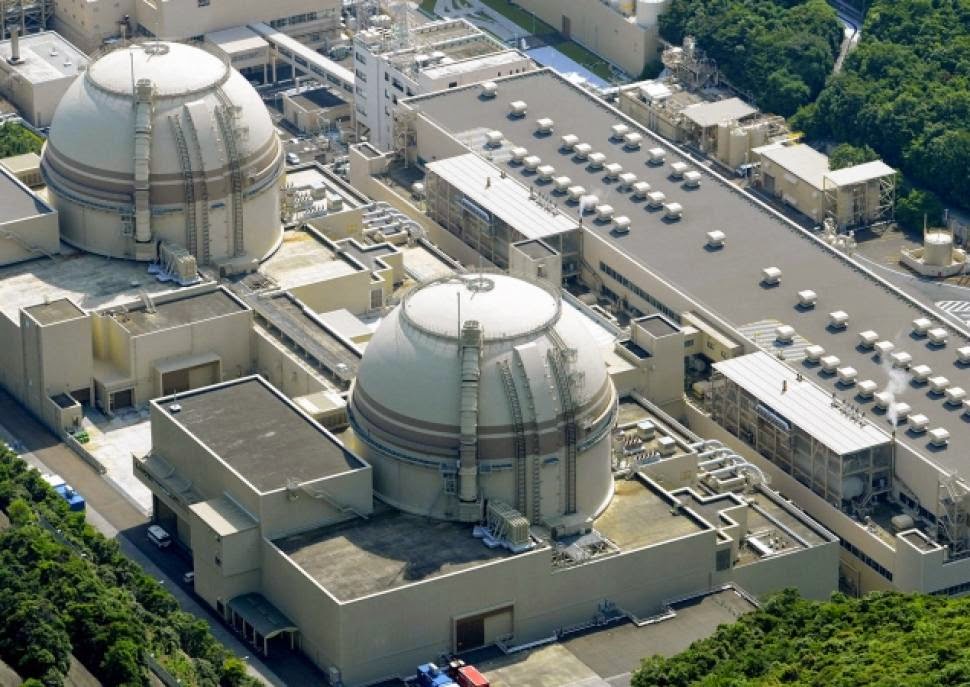
Should the Japanese give nuclear power another chance?

Japanese  nuclear power
On September 9, 2014, the Japan Times reported an increasing number of suicides coming from the survivors of the March 2011 disaster. In Minami Soma Hospital, which is located 23 km away from the power plant, the number of patients experiencing stress has also increased since the disaster. What's more, many of the survivors are now jobless and therefore facing an uncertain future.

This is not the first time that nuclear power has victimized the Japanese people. In 1945, atomic bombs exploded in Hiroshima and Nagasaki, creating massive fears about nuclear power in the Japanese population. It took 20 years for the public to erase the trauma of these events. It was then -- in the mid 1960s(?) -- that the Fukushima Daiichii Nuclear Power Plant was built.

According to Professor Tetsuo Sawada, Assistant Professor in the Laboratory of Nuclear Reactors at Tokyo University, it took a lot of effort to assure people that nuclear power was safe and beneficial. The first step was a legal step: In 1955, the Japanese government passed a law decreeing that nuclear power could only be used for peaceful purposes.

"But that law was not enough to assure people to accept the establishment of nuclear power," said Prof. Sawada.

He explained that the economy plays an important role in public acceptance of nuclear power. Through the establishment of nuclear power plants, more jobs were created, which boosted the economy of the Fukushima region at that time.

"Before the Fukushima disaster, we could find many pro-nuclear people in the area of nuclear power plants since it gave them money," said Prof. Sawada.

Now, more than forty years have passed and the public's former confidence has evolved into feelings of fear about nuclear power and distrust toward the government.

According to a study conducted by Noriko Iwai from the Japanese General Social Survey Research Center, the Fukushima nuclear accident has heightened people's perception of disaster risks, fears of nuclear accident, and recognition of pollution, and has changed public opinion on nuclear energy policy.
"Distance from nuclear plants and the perception of earthquake risk interactively correlate with opinions on nuclear issues: among people whose evaluation of earthquake risk is low, those who live nearer to the plants are more likely to object to the abolishment of nuclear plants," said Iwai.

This finding is in line with the perception of Sokyu Genyu, a chief priest in Fukujuji temple, Miharu Town, Fukushima Prefecture. As a member of the Reconstruction Design Council in Response to the Great East Japan Earthquake, he argued that both the Fukushima Daiichi and Daini nuclear power plants should be shut down in response to the objection of 80% of Fukushima residents.

However, the Japanese government, local scientists and international authorities have announced that Fukushima is safe. Radiation levels are below 1mSv/y, a number that, according to them, we should not be worried about. But the public do not believe in numbers.

But Genyu was not saying that these numbers are scientifically false. Rather, he argues that the problem lies more in the realm of social psychology. Despite the announcement about low-radiation levels, the Japanese people are still afraid of radiation.

"It is reasonable for local residents in Fukushima to speak out very emotionally. Within three months of the disaster, six people had committed sucide. They were homeless and jobless, " said Genyu.

It is heart-breaking to know that victims of the Fukushima Daiichi nuclear accident died not because of radiation, but instead because of depression. Besides the increasing number of suicides, the number ofpatients suffering from cerebrovascular disease (strokes)has also risen. In Minami-Soma Hospital, the population of stroke patients increased by more than 100% after the disaster.

Local doctors and scientists are now actively educating students in Fukushima, convincing them that the radiation will not affect their health.

Dr. Masaharu Tsubokura, a practicing doctor at Minami-Soma Hospital, has been informing students that Fukushima is safe. But sadly, their responses are mostly negative and full of apathy.

"I think the Fukushima disaster is not about nuclear radiation but is rather a matter of public trust in the technology ," said Dr. Tsubokura.

Dr. Tsubokura has given dosimeters, a device used to measure radiation, to children living in Minami-Soma city. But apparently, this was not enough to eliminate people's fears.

In 2012, Professor Ryogo Hayano, a physicist from the University of Tokyo, joined Dr. Tsubokura in Minami-Soma Hospital and invented BABYSCAN technology, a whole-body scanning to measure radiation in small children as well as to allay the fears of Fukushima parents.

"BABYSCAN is unnecessary but necessary. It is unnecessary because we know that the radiation is low. But it is necessary to assure parents that their children are going to be okay," said Prof. Hayano.
After witnessing the fears of the Fukushima people, Prof. Hayano thinks that nuclear power is no longer appropriate for Japan. He believes that the government should shut down nuclear power plants.

"As a scientist, I know that nuclear power is safe and cheap. But looking at the public's fear in Fukushima, I think it should be phased out," said Prof. Hayano.

But, does the government care about the public when it comes to politics?
It has only been three years since the disaster and Prime Minister Shinzo Abe has been keen to revive the country's nuclear power plants. The operations of more than 50 nuclear power plants in Japan have been suspended because of the Daiichi power plant meltdown.

Last month, Japan's Nuclear Regulation Authority approved the reopening of a power plant in Sendai for 2015.

Source: ResearchSEA

The Fukushima accident underscores need for U.S. to seek out new information about nuclear plant hazards

Fukushima accident 
A new congressionally mandated report from the National Academy of Sciences concludes that the overarching lesson learned from the 2011 Fukushima Daiichi nuclear accident is that nuclear plant licensees and their regulators must actively seek out and act on new information about hazards with the potential to affect the safety of nuclear plants. The committee that wrote the report examined the causes of the Japan accident and identified findings and recommendations for improving nuclear plant safety and offsite emergency responses to nuclear plant accidents in the U.S.

The accident at the Fukushima Daiichi plant was initiated by the Great East Japan Earthquake and tsunami on March 11, 2011. The earthquake knocked out offsite AC power to the plant, and the tsunami inundated portions of the plant site. Flooding of critical equipment resulted in the extended loss of onsite power with the consequent loss of reactor monitoring, control, and cooling functions in multiple units. Three reactors -- Units 1, 2, and 3 -- sustained severe core damage, and three reactor buildings -- Units 1, 3, and 4 -- were damaged by hydrogen explosions. Offsite releases of radioactive materials contaminated land in Fukushima and several neighboring prefectures, prompting widespread evacuations, distress among the population, large economic losses, and the eventual shutdown of all nuclear power plants in Japan.

Personnel at the Fukushima Daiichi plant responded to the accident with courage and resilience, and their actions likely reduced its severity and the magnitude of offsite radioactive material releases, the committee said. However, several factors relating to the management, design, and operation of the plant prevented plant personnel from achieving greater success and contributed to the overall severity of the accident.

Nuclear plant operators and regulators in the U.S. and other countries are taking useful actions to upgrade nuclear plant systems, operating procedures, and operator training in response to the Fukushima Daiichi accident. As the U.S. nuclear industry and its regulator, the U.S. Nuclear Regulatory Commission (USNRC), implement these actions, the report recommends particular attention to improving the availability, reliability, redundancy, and diversity of specific nuclear plant systems:

·DC power for instrumentation and safety system control

·tools for estimating real-time plant status during loss of power

·reactor heat removal, reactor depressurization, and containment venting systems and protocols

·instrumentation for monitoring critical thermodynamic parameters -- for example temperature and pressure -- in reactors, containments, and spent-fuel pools

·hydrogen monitoring, including monitoring in reactor buildings, and mitigation

·instrumentation for both onsite and offsite radiation and security monitoring

·communications and real-time information systems

To further improve the resilience of U.S. nuclear plants, the report also recommends:
·The U.S. nuclear industry and the USNRC should give specific attention to improving resource availability and operator training, including training for developing and implementing ad hoc responses to deal with unanticipated complexities.

·The U.S. nuclear industry and USNRC should strengthen their capabilities for assessing risks from events that could challenge the design of nuclear plant structures and components and lead to a loss of critical safety functions. Part of this effort should focus on events that have the potential to affect large geographic regions and multiple nuclear plants, including earthquakes, tsunamis and other geographically extensive floods, and geomagnetic disturbances. USNRC should support these efforts by providing guidance on approaches and overseeing rigorous peer review.

·USNRC should further incorporate modern risk concepts into its nuclear safety regulations using these strengthened capabilities.

·USNRC and the U.S. nuclear industry must continuously monitor and maintain a strong safety culture and should examine opportunities to increase the transparency of and communication about their efforts to assess and improve nuclear safety.

Until now, U.S. safety regulations have been based on ensuring plants are designed to withstand certain specified failures or abnormal events, or "design-basis-events"-- such as equipment failures, loss of power, and inability to cool the reactor core -- that could impair critical safety functions. However, four decades of analysis and experience have demonstrated that reactor core-damage risks are dominated by "beyond-design-basis events," the report says. The Fukushima Daiichi, Three Mile Island, and Chernobyl accidents were all initiated by beyond-design-basis events. The committee found that current approaches for regulating nuclear plant safety, which have been based traditionally on deterministic concepts such as the design-basis accident, are clearly inadequate for preventing core-melt accidents and mitigating their consequences. A more complete application of modern risk-assessment principles in licensing and regulation could help address this inadequacy and enhance the overall safety of all nuclear plants, present and future.

The Fukushima Daiichi accident raised the question of whether offsite emergency preparedness in the U.S. would be challenged if a similar-scale event -- involving several concurrent disasters -- occurred here. The committee lacked time and resources to perform an in-depth examination of U.S. preparedness for severe nuclear accidents. The report recommends that the nuclear industry and organizations with emergency management responsibilities assess their preparedness for severe nuclear accidents associated with offsite regional-scale disasters.

Emergency response plans, including plans for communicating with affected populations, should be revised or supplemented to ensure that there are scalable and effective strategies, well-trained personnel, and adequate resources for responding to long-duration accident/disaster scenarios. In addition, industry and emergency management organizations should assess the balance of protective actions -- such as evacuation, sheltering-in-place, and potassium iodide distribution -- for affected offsite populations and revise the guidelines as appropriate. Particular attention should be given to protective actions for children, those who are ill, and the elderly and their caregivers; long-term social, psychological, and economic impacts of sheltering-in-place, evacuation, and/or relocation; and decision making for resettlement of evacuated populations in areas that were contaminated by radioactive material.

Source: National Academy of Sciences

Report: http://www.nap.edu/catalog.php?record_id=18294
Environment Now
Technology+Physics
Health + Medicine
Plants + Animals
SPACE + TIME
Science + Society

 
BREAKING NEWS