-->
LATEST HEADLINES
66th REPUBLIC DAY WISHES TO ALL INDIANSZizix Tutorials
LATEST POSTS TIME OF NOW
Showing posts with label ECOSYSTEMS. Show all posts

Deep Sea Mining: What are the risks?

During the launch event in Kiel, the project partners plan investigations to ecosystems around the manganese nodules. Photo: J. Steffen, GEOMAR

GEOMAR coordinates European cooperation for the risk assessment
01.29.2015 / Kiel. 50 specialists in deep-sea ecology, marine mining and deep-sea observation of 25 European research institutions meeting this week at the GEOMAR Helmholtz Centre for Ocean Research Kiel. This will free the start of a three-year research project to investigate the risks of potential ore mining on the seabed. The project called "JPI Oceans Ecological aspects of deep-sea mining" is coordinated at GEOMAR.

The world population is growing. This also means that more and more people need a home, want to work with computers and other electronic devices and consume energy. For the construction of houses for the manufacture of electronic goods, but also for the production of wind turbines will require significant amounts of various metals. Currently, all metal ores are promoted on almost a third of the earth's surface - on the continents. 
In some regions of the ocean manganese nodules are recorded in the Atlantic as here, close together on the ocean floors. Photo: Nils Brenke, CeNak

However, in recent decades engaged again, the other two thirds, the oceans, the focus of governments and resource companies. "Many questions about a potential ore mining in the deep sea, however, are still open," says Dr. Matthias Haeckel from GEOMAR Helmholtz Centre for Ocean Research Kiel. He is the scientific coordinator of the "Ecological aspects of deep-sea mining" project to investigate the potential environmental risks in the next three years. A consortium of research ministries in eleven European countries promotes it as part of the Joint Programme Healthy and Productive Seas (JPI Oceans) initiative with a total of 9.5 million euros. 
In the Clarion-Clipperton Zone are the largest known manganese nodule deposits. Here, the ISA has been awarded 13 research licenses. Image Reproduced from the GEBCO world map 2014 www.gebco.net,
 In the Clarion-Clipperton Zone are the largest known manganese nodule deposits. Here, the ISA has been awarded 13 research licenses. Image Reproduced from the GEBCO world map 2014

This week, the project starts with a kick-off meeting at GEOMAR. A total of 25 partner institutions from these eleven countries involved in the project. The focus is primarily known as manganese nodules. It is spherical or cauliflower-shaped Erzknollen, which are usually at depths below 4000 meters on the large abyssal plains. They consist not only from the eponymous manganese, but also contain iron and coveted metals such as copper, cobalt or nickel. Already in the 1970s, there were initial plans to reduce manganese nodules from the deep sea, but never came out on trials. The largest reserves are currently known from the Clarion-Clipperton Fracture Zone in the central Pacific. As a result of these activities in international waters on the basis of the International Law of the Sea (UNCLOS), the International Seabed Authority (International Seabed Authority, ISA) was founded in 1994. 

It manages the entire seabed beyond the exclusive economic zone (200 nautical miles) of individual states. To date, the ISA has awarded 13 research licenses for exploration of manganese nodule fields in the Pacific, including in Germany and other European countries. 
Sample of the seabed in DISCOL area with top resting manganese nodules.
                     Sample of the seabed in DISCOL area with top resting manganese nodules. 
                                                    Photo: M. Haeckel, GEOMAR

"But there is no mining licenses, which would only be a next step," said Dr. Haeckel. Since the ISA also aims to ensure effective protection of the marine environment from the potential consequences of ocean mining, relevant research for the licensees are required. "Of course industrial activities on the ocean floor will have an impact, because they disturb the soil and the water column about it," says Dr. Haeckel. Therefore, it is important to know the ecosystems on the sea floor and its local, regional and national connections and interactions accurately. Already this year, several expeditions of the new German research vessel SONNE in the Pacific are planned. 

The first trips in March and April perform the participating scientists to the German, Belgian and French license areas and in a defined by the ISA reserve in the Clarion-Clipperton Zone. Further trips from July to October have the so-called DISCOL area in Peru Basin to the destination. There, in 1989, a very limited area of the seabed was plowed for research purposes. "The goal of this experiment is to recognize the long-term consequences of large-area device used for deep-sea sediments," explains Professor Jens Greinert from GEOMAR, who will lead one of the exits to DISCOL area. Now, a quarter century after the disturbance experiment, the scientists will examine the then machined seabed areas exactly compare with adjacent undisturbed areas to determine, can recover disturbed communities in the deep sea as fast. "We should get to know each other better before we start, a large area to intervene in the deep sea it easy," says project coordinator Dr. Haeckel. 

Source: GEOMAR

Blue mussels not yet the bellwether of NE coastal environment

Marcy Cockrell installs cages to protect mussels from predators. In Maine, mussels inside cages faired as well as mussels in the wild. In Long Island Sound and Narragansett Bay it was a different story. Credit: Brown University

Ecologists sometimes look to mussel species, a well-studied and foundational genus in estuaries, as model organisms for assessing the condition of coastal habitats, which are crucial for people and well as the broader environment.

But a new study in the journal Ecosphere suggests that the seemingly simple blue mussel, when studied on regional scale from Maine to Connecticut, harbors at least three specific mysteries that must be solved if the mollusks are to serve as the "canaries in the coal mine" of the Northeast coast.

"Mussels could indeed be a good sentinel species for rocky shores, but what our work suggests is that we need to know a lot more about how they behave in these different estuarine settings to use them as an indicator of ecosystem health," said conservation scientist and study senior author Heather Leslie, the Peggy and Henry D. Sharpe Assistant Professor of Environmental Studies.

For the study, Leslie and former students Marcy Cockrell and Joanna Bernhardt monitored and experimented with mussels at 18 sites in the Casco Bay of Maine, the Narragansett Bay of Rhode Island, and the Long Island Sound of Connecticut and New York in 2010 and 2011 (a region spanning about 600 kilometers of coastline). They measured the abundance of mussels both at adult and larval stages, studied the populations of neighboring rocky shore animals and marine algae, and tracked data on ecosystem factors such as water salinity, temperature, nutrients, oxygen, and local human population density. In the experiments, the team protected some mussels with cages to expose the effect that birds, crabs and other predators have on their numbers.

In the end, the research uncovered three intriguing mysteries of mussel life across the region, particularly in Casco Bay:

Generation gaps: Adults were populous but "recruitment" of young mussels from surrounding waters was low in Long Island Sound and Narragansett Bay. The opposite was true in Casco Bay. There, juvenile recruitment was high but adult populations were low. Few Maine predators: The cage experiments showed a significant role for mussel predators in Long Island Sound and Narragansett Bay, but not in Casco Bay. There, unprotected mussels fared about as well as the protected ones. Inner vs. outer: In each estuary, Leslie's team made measurements at sites nestled well within the bay, as well as at sites closer to the open ocean. Prior research suggested that higher levels of food within the bay would promote growth and abundance for the filter-feeding mussels (due to higher levels of nutrients and phytoplankton at the inner estuary sites). The study results were notably mixed across the whole region, however, providing little support for that hypothesis.

Explanations await further research. Genetic studies could determine, for example, whether the young mussels that are so abundant in Casco Bay may be floating up from the more southerly shores. If so, that suggests that mussel population dynamics can only be understood on regional (or multi-estuary) geographic scale.

Meanwhile, understanding why predator activity seems low in Casco Bay might require learning more about the local predator populations there. The findings could shed light on whether the ecosystem is in balance or other factors are at play.

"We did this because we want to understand how these systems work," Leslie said. "Given their accessibility and how well-studied they have been in other locations, rocky shores are logical sentinel ecosystems. They provide an opportunity to investigate how climate change and other more local-scale human activities are affecting New England's coast."

It may take more work to crack open the mussels' mysteries, but the stakes are high enough to make it worthwhile, Leslie said.

Source: Brown University

Small, fast, and crowded: Mammal traits amplify tick-borne illness

Chipmunks are small-bodied animals with fast lives and dense populations. When ticks feed on them, they are more likely to pick up multiple disease-causing pathogens. Credit: © dwags / Fotolia
In the U.S., some 300,000 people are diagnosed with Lyme disease annually. Thousands also suffer from babesiosis and anaplasmosis, tick-borne ailments that can occur alone or as co-infections with Lyme disease. According to a new paper published in PLOS ONE, when small, fast-living mammals abound, so too does our risk of getting sick.

In eastern and central North America, blacklegged ticks are the primary vectors for Lyme disease, babesiosis, and anaplasmosis. The pathogens that cause these illnesses are widespread in nature; ticks acquire them when they feed on infected animals.

Richard S. Ostfeld, the paper's lead author and a scientist at the Cary Institute of Ecosystem Studies, has researched the ecology of Lyme disease since 1992. "A pattern emerged in our long-term studies. Ticks that fed on certain rodents and shrews were much more likely to pick up multiple pathogens, making the environment riskier for people."

To investigate why mammals differ in their 'reservoir competence' or ability to transmit pathogens to ticks, Ostfeld and his co-authors from Bard College, Oregon State University, the University of South Florida, and EcoHealth Alliance took a two-pronged approach.
First, they looked at life history traits for nine mammals known to harbor Lyme disease, babesiosis, and anaplasmosis. Attributes like body size, litter size, and life span were taken into consideration.

Then they looked at the role of mammal population density. As 'sit and wait' parasites, ticks are much more likely to encounter animals with dense populations. This, in turn, could help pathogens evolve to exploit specific hosts, resulting in more effective transmission rates.

For Lyme disease and anaplasmosis, fast life history features were a strong predictor of an animal's ability to transmit infection to ticks. Body size was inversely related to reservoir competence. Raccoon, skunk, opossum, squirrel, and deer infected fewer ticks than their mouse, chipmunk, and shrew counterparts.

Ostfeld notes, "This is consistent with past research on Lyme disease, West Nile virus, and Eastern Equine encephalitis. There is evidence that animals that mature early and have frequent, large litters invest less in some immune defenses, making them better pathogen hosts."

Population density was the best predictor of species' abilities to transmit all three pathogen groups, with animals that ticks encountered most frequently being the most effective at transferring infection. Co-author Felicia Keesing of Bard College explains, "Fast life history and high population density often go hand-in-hand. In rodents and shrews, pathogen adaptation and poor immune defense may be working together to amplify disease spread."
With Ostfeld concluding, "In our struggle to manage the ever-growing list of tick-borne diseases, we need to understand which animals magnify human disease risk. Our results suggest when generalist pathogens emerge, small mammals with large populations and a fast pace of life warrant careful monitoring."

Kudzu can release soil carbon, accelerate global warming

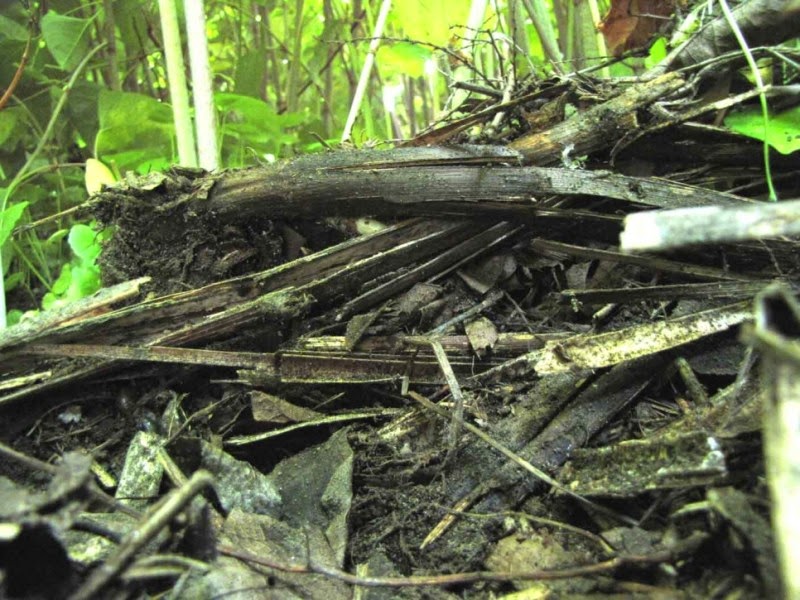
This layer of decomposing knotweed will eventually form soil organic matter in invaded ecosystems.
 Credit: Image courtesy of Clemson University
Clemson University scientists are shedding new light on how invasion by exotic plant species affects the ability of soil to store greenhouse gases. The research could have far-reaching implications for how we manage agricultural land and native ecosystems.

In a paper published in the scientific journal New Phytologist, plant ecologist Nishanth Tharayil and graduate student Mioko Tamura show that invasive plants can accelerate the greenhouse effect by releasing carbon stored in soil into the atmosphere.
Since soil stores more carbon than both the atmosphere and terrestrial vegetation combined, the repercussions for how we manage agricultural land and ecosystems to facilitate the storage of carbon could be dramatic.

In their study, Tamura and Tharayil examined the impact of encroachment of Japanese knotweed and kudzu, two of North America's most widespread invasive plants, on the soil carbon storage in native ecosystems.

They found that kudzu invasion released carbon that was stored in native soils, while the carbon amassed in soils invaded by knotweed is more prone to oxidation and is subsequently lost to the atmosphere.

The key seems to be how plant litter chemistry regulates the soil biological activity that facilitates the buildup, composition and stability of carbon-trapping organic matter in soil.

"Our findings highlight the capacity of invasive plants to effect climate change by destabilizing the carbon pool in soil and shows that invasive plants can have profound influence on our understanding to manage land in a way that mitigates carbon emissions," Tharayil said.

Tharayil estimates that kudzu invasion results in the release of 4.8 metric tons of carbon annually, equal to the amount of carbon stored in 11.8 million acres of U.S. forest.
This is the same amount of carbon emitted annually by consuming 540 million gallons of gasoline or burning 5.1 billion pounds of coal.

"Climate change is causing massive range expansion of many exotic and invasive plant species. As the climate warms, kudzu will continue to invade northern ecosystems, and its impact on carbon emissions will grow," Tharayil said.

The findings provide particular insight into agricultural land-management strategies and suggest that it is the chemistry of plant biomass added to soil rather than the total amount of biomass that has the greatest influence on the ability of soil to harbor stable carbon.

"Our study indicates that incorporating legumes such as beans, peas, soybeans, peanuts and lentils that have a higher proportion of nitrogen in its biomass can accelerate the storage of carbon in soils," Tharayil said.

Thrarayil's lab is following up this research to gain a deeper understanding of soil carbon storage and invasion.

Tharayil leads a laboratory and research team at Clemson that studies how the chemical and biological interactions that take place in the plant-soil interface shape plant communities. He is also the director of Clemson's Multi-User Analytical Laboratory, which provides researchers with access to highly specialized laboratory instruments.

Source: Clemson University

Climate change projected to drive species northward

Coho salmon are among the species anticipated to shift northward with climate change. Credit: NOAA Fisheries
Anticipated changes in climate will push West Coast marine species from sharks to salmon northward an average of 30 kilometers per decade, shaking up fish communities and shifting fishing grounds, according to a new study published in Progress in Oceanography.

The study suggests that shifting species will likely move into the habitats of other marine life to the north, especially in the Gulf of Alaska and Bering Sea. Some will simultaneously disappear from areas at the southern end of their ranges, especially off Oregon and California.
"As the climate warms, the species will follow the conditions they're adapted to," said Richard Brodeur, a NOAA Fisheries senior scientist at the Northwest Fisheries Science Center's Newport Research Station and coauthor of the study. "We're going to see more interactions between species and there will be winners and losers that we cannot foresee."
The study, led by William Cheung of the University of British Columbia, estimated changes in the distribution of 28 near-surface fish species commonly collected by research surveys in the northeast Pacific Ocean. The researchers used established global climate models to project how the distribution of the fish would shift by 2050 as greenhouse gases warm the atmosphere and, in turn, the ocean surface.

Brodeur cautioned that like any models, climate models carry uncertainty. While they provide a glimpse of the most likely changes in global climate, they may be less accurate when estimating more fine-scale, local changes.

"Nothing is certain," he said, "but we think we have a picture of the most likely changes."
Some species shifts are already being documented as West Coast waters are warming: predatory Humboldt squid from Central and South America have invaded the West Coast of North America in recent years, albacore have shifted to more northerly waters and eulachon have disappeared from warming waters at the southern end of their range.

"Thinking more broadly, this re-shuffling of marine species across the whole biological community may lead to declines in the beneficial functions of marine and coastal ecosystems," said Tom Okey, a Pew Fellow in Marine Conservation at the University of Victoria and a coauthor of the study. "These declines may occur much more rapidly and in more surprising ways than our expected changes in species alone."

The study anticipates warm-water species such as thresher sharks and chub mackerel becoming more prominent in the Gulf of Alaska and off British Columbia. Some predators such as sea lions and seabirds, which rear their young in fixed rookeries or colonies, may find the fish they usually prey on moving beyond predators' usual foraging ranges.

"If their prey moves farther north, they either have to travel farther and expend more energy to get to them, or find something else to eat," Brodeur said. "It's the same thing for fishermen. If it gets warmer, the fish they depend on are going to move up north and that means more travel time and more fuel will be needed to follow them, or else they may need to switch to different target species. It may not happen right away but we are likely to see that kind of a trend."

El Nino years, when tropical influences temporarily warm the eastern Pacific, offer a preview of what to expect as the climate warms.

Shifts in marine communities may be most pronounced in high-latitude regions such as the Gulf of Alaska and Bering Sea, which the study identifies as "hotspots" of change. Cold-water species such as salmon and capelin have narrower temperature preferences than warmer water species, making them more sensitive to ocean warming and likely to respond more quickly.

An intrusion of warm-water species into cooler areas could lead to significant changes in marine communities and ecosystems. The diversity of northern fish communities, now often dominated by a few very prolific species such as walleye pollock, may increase as southern species enter the region, leading to new food web and species interactions.

Source: NOAA Fisheries West Coast Region

Scientists estimate total weight of plastic floating in world's oceans: Nearly 269,000 tons of plastic pollution floating in the ocean

Model results for global count density in four size classes. Model prediction of global count density (pieces km−2; see colorbar) for each of four size classes (0.33–1.00 mm, 1.01–4.75 mm, 4.76–200 mm, and >200 mm). Credit: Marcus Eriksen et al, PLoS ONE, 2014; DOI: 10.1371/journal.pone.0111913
Nearly 269,000 tons of plastic pollution may be floating in the world's oceans, according to a study published December 10, 2014 in the open-access journal PLOS ONE by Marcus Eriksen from Five Gyres Institute and colleagues.

Microplastic pollution is found in varying concentrations throughout the oceans, but estimates of the global abundance and weight of floating plastics, both micro and macroplastic, lack sufficient data to support them. To better estimate the total number of plastic particles and their weight floating in the world's oceans, scientists from six countries contributed data from 24 expeditions collected over a six-year period from 2007-2013 across all five sub-tropical gyres, coastal Australia, Bay of Bengal, and the Mediterranean Sea. The data included information about microplastics collected using nets and large plastic debris from visual surveys, which were then used to calibrate an ocean model of plastic distribution.

Based on the data and model, the authors of the study estimate a minimum of 5.25 trillion plastic particles weighing nearly 269,000 tons in the world's oceans. Large plastics appear to be abundant near coastlines, degrading into microplastics in the 5 subtropical gyres, and that the smallest microplastics were present in more remote regions, such as the subpolar gyres, which the authors did not expect. The distribution of the smallest microplastics in remote regions of the ocean may suggest that gyres act as 'shredders' of large plastic items into microplastics, after which they eject them across the ocean.

"Our findings show that the garbage patches in the middle of the five subtropical gyres are not the final resting places for the world's floating plastic trash. The endgame for micro-plastic is interactions with entire ocean ecosystems," says Marcus Eriksen, PhD, Director of Research for the 5 Gyres Institute.

Source: PLOS

Is Sahara Desert several million years older than previously thought?

Sahara desert. Credit: © mrks_v / Fotolia
A team of scientists from Norway, France and China have revised the view that the Sahara desert has existed for only the last 2 to 3 million years.

The Sahara is the world's largest subtropical desert. During the last decades, numerous scientific studies have probed its geological and archeological archives seeking to reveal its history. Despite some important breakthroughs, there are still basic questions that lack satisfactory answers.

For example, how old is the Sahara desert? It is widely believed that Sahara desert first appeared during the last 2 to 3 million years, but recent discoveries such as ancient sand dunes and dust records in marine cores push the possible onset of Saharan aridity back in time by several million years. Until now, however, there have been no good explanations for such an early Sahara onset.

This study pinpoints the Tortonian stage (~7-11 million years ago) as a pivotal period for triggering North African aridity and creating the Sahara desert. Using snapshot simulations with the Norwegian Earth System Model (NorESM) model suite, the international team explored the climate evolution of North Africa through major tectonic shifts over the last 30 million years. They found that the region undergoes aridification with the shrinkage of the Tethys -- a giant ocean that was the origin of the modern Mediterranean, Black and Caspian Seas -- during the Tortonian.

The simulations are the first to show that the Tethys shrinkage has two main consequences for North African climate. First, it weakens the African summer monsoon circulations and dries out North Africa. Second, it enhances the sensitivity of the African summer monsoon and its associated rainfall to orbital forcing. The Tortonian stage thus marks the time when North Africa shifted from a permanently lush, vegetated landscape to a landscape experiencing arid/humid cycles on orbital time scales.

Interestingly, these major changes in North African climate and environment are coincident with an important time period for the emergence of early hominids.

Source: Uni Research

Colorado River Delta greener after engineered pulse of water

Water being released from Morelos Dam in the first environmental release of water to the Colorado River Delta. The Minute 319 pulse flow of water started March 23, 2014 and ended May 18, 2014. Credit: Rebecca Lester, Deakin University, Australia
The engineered spring flood that brought water to previously dry reaches of the lower Colorado River and its delta resulted in greener vegetation, the germination of new vegetation along the river and a temporary rise in the water table, according to new results from the binational team of scientists studying the water's effects.

The experimental pulse flow of water was the result of a U.S.-Mexico agreement called Minute 319.

"The pulse flow worked," said Karl W. Flessa, co-chief scientist for the Minute 319 Science Team. "A small amount of water can have a big effect on the delta's ecosystem."Starting March 23, 2014, and ending May 18, approximately 105,392 acre-feet (130 million cubic meters) of water was released into the dry river bed below Morelos Dam, which straddles the U.S.-Mexico border just west of Yuma.

"The groundwater was recharged, vegetation got greener than previous years and the water helped germinate new native vegetation," said Flessa, a University of Arizona professor of geosciences. "As a bonus, the river reached the sea."

In addition, people living along the river benefited, he said.

"People in the communities along the river were just overjoyed to see their river again," he said. "When the surface water was there, people celebrated. Kids who'd never seen water in the river before got to splash in it."

The science team includes more than 21 scientists from universities, government agencies and nongovernmental organizations from both Mexico and the U.S, including the UA, the Universidad Autónoma de Baja California, the U.S. Geological Survey, the U.S. Bureau of Reclamation, The Nature Conservancy, the Tucson-based Sonoran Institute and the Ensenada-based Pronatura Noroeste.

Flessa will present the team's findings at his talk, "The Science and Policy of the First Environmental Flows to the Colorado River Delta," on Dec. 18 as part of the American Geophysical Union's annual meeting in San Francisco.

Although most of the water soaked into the ground in the 37 miles (60 km) below the dam, the river's surface flow reached areas farther downstream that had been targeted for restoration. The increase in groundwater revived vegetation along the entire 83-mile (134 km) route to the sea.

By comparing Landsat 8 satellite images from August 2013 with those from August 2014, team members calculated a 23 percent increase in the greenness of riparian zone vegetation.
Although the groundwater did eventually recede, the surface water caused the germination of new willows and cottonwoods. Those plants germinate after natural spring floods, and their roots can grow fast enough to keep up with the receding water table.

The surface water reached the restoration sites prepared by the Sonoran Institute and Pronatura Noroeste and helped establish native vegetation.

"So long as the roots get down into the permanent water table, then you have established a new bunch of trees that will then live for 20, 30, 40 years," Flessa said. "Those trees will attract birds."

The scientists already observed an increase in the numbers of birds, he said.
Learning where the newly germinated plants survived past the first summer will help the researchers figure out where ecosystem restoration will do the most good using the least amount of water, he said.

"The water that soaked into the ground is also good for the farmers," Flessa said. "It raises the water table and they pump that water -- so this isn't just about trees and birds."
The team will continue to monitor the lower Colorado River Delta's vegetation and hydrological response to the pulse flow, including the long-term effect on groundwater. They will also study how the new vegetation affects both resident birds and those migrating along the Pacific Flyway.

The five-year program to monitor the environmental results of the pulse flow is being supported by government agencies and environmental groups in both countries, under the auspices of the International Boundary and Water Commission.

The Minute 319 pulse flow is part of a five-year agreement (2012-17) adopted by the International Boundary and Water Commission, under the framework of a 1944 U.S. -- Mexico treaty that governs water allocations on the Colorado River between the two countries.

The agreement provides multiple benefits for Colorado River water users in both countries, including environmental flows to the delta. Minute 319 identifies criteria for sharing of future water shortages and surpluses between the two countries, allows storage of Mexican water in Lake Mead and supports improvements to Mexican irrigation infrastructure.
"Another pulse flow would require a new agreement, because Minute 319 calls for only one pulse flow within the five-year term of the minute," Flessa said. "We hope the results of this pulse flow encourage the negotiators to make this happen again."

Source: University of Arizona
Environment Now
Technology+Physics
Health + Medicine
Plants + Animals
SPACE + TIME
Science + Society

 
BREAKING NEWS